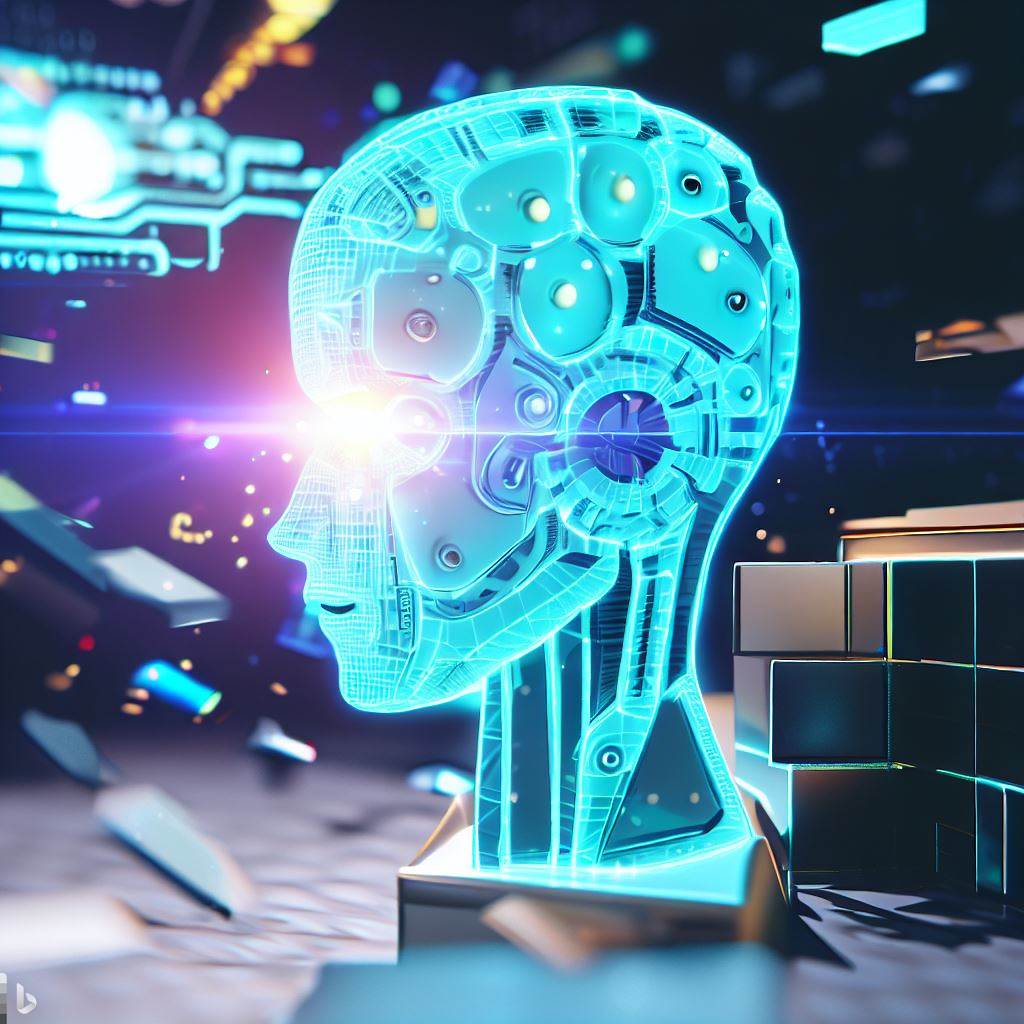

Artificial Intelligence (AI) and Machine Learning (ML) are two of the most popular and fastest-growing technologies of the 21st century. AI is a broad field that encompasses the creation of intelligent machines that can learn and reason like humans, while ML is a subset of AI that focuses on developing algorithms that enable machines to learn from data without being explicitly programmed.
AI and ML are transforming industries and businesses in ways that were once unimaginable. From predictive analytics to speech recognition, AI and ML are making it possible for machines to perform tasks that were once only possible for humans. In this article, we will explore what AI and ML are, their applications, and the impact they are having on the world.
What is Artificial Intelligence?
Artificial Intelligence (AI) refers to the development of intelligent machines that are capable of performing tasks that typically require human intelligence, such as perception, reasoning, learning, and decision-making. AI is a broad field that encompasses a wide range of technologies, including Machine Learning (ML), Natural Language Processing (NLP), Robotics, and Computer Vision.
At its core, AI is all about creating algorithms and systems that can analyze and process data in order to make intelligent decisions. These systems are typically built on large datasets that are fed into machine learning algorithms, which are then used to train the AI system to recognize patterns, make predictions, and generate insights.
Machine Learning (ML) is a subset of AI that focuses on creating algorithms that can learn from data without being explicitly programmed. In ML, an algorithm is trained on a large dataset, and it uses this dataset to recognize patterns and make predictions about new data. As the algorithm continues to learn from new data, it becomes more accurate and better able to make predictions.
Another important aspect of AI is Natural Language Processing (NLP), which is concerned with creating algorithms and systems that can understand, interpret, and generate human language. NLP is used in a wide range of applications, including chatbots, voice assistants, and language translation.
Robotics is another important area of AI, which is concerned with the development of robots and other autonomous machines that can perform tasks in a variety of environments. Robotics combines AI, machine learning, and other technologies to create machines that can perceive their environment, make decisions, and take actions to achieve their goals.
Computer Vision is another important area of AI, which is concerned with creating algorithms and systems that can interpret visual information from the world around us. Computer vision is used in a wide range of applications, including image recognition, object detection, and autonomous driving.
In summary, AI is a broad and rapidly evolving field that encompasses a wide range of technologies and applications. Its goal is to create intelligent machines that can perform tasks that typically require human intelligence, and it has the potential to transform many aspects of our lives, from healthcare to transportation to finance.
What is Machine Learning?
Machine Learning (ML) is a subset of Artificial Intelligence (AI) that focuses on creating algorithms and systems that can learn from data without being explicitly programmed. In traditional programming, developers write code that specifies how a computer program should behave under different circumstances. With ML, however, developers create algorithms that can learn and improve from data, without the need for explicit programming.
The key idea behind ML is to train algorithms on large datasets, allowing them to recognize patterns and make predictions based on that data. This training process is iterative, meaning that the algorithm is continually refined and improved as it is exposed to new data.
There are three main types of ML: supervised learning, unsupervised learning, and reinforcement learning.
Supervised learning is the most common type of ML, and it involves training an algorithm on labeled data. In supervised learning, the algorithm is given a set of input-output pairs, and it uses this data to learn how to map inputs to outputs. For example, an algorithm might be trained on a dataset of images and their corresponding labels (e.g., “dog”, “cat”, “car”, etc.), and it would learn to recognize the features of each image and classify them accordingly.
Unsupervised learning, on the other hand, involves training an algorithm on unlabeled data, and it is used to find patterns and relationships within the data. Unsupervised learning is often used for clustering, where the algorithm groups data points into clusters based on their similarity.
Reinforcement learning is a type of ML that involves training an agent to interact with an environment and learn from the rewards and punishments it receives. In reinforcement learning, the agent receives feedback in the form of rewards or penalties based on its actions, and it learns to take actions that maximize its reward.
ML is used in a wide range of applications, including image recognition, speech recognition, natural language processing, predictive analytics, and recommendation systems. ML has the potential to transform many industries and has already had a significant impact in areas such as healthcare, finance, and transportation.
In summary, Machine Learning is a powerful tool that enables algorithms to learn from data and improve their performance over time. Its ability to recognize patterns and make predictions has led to its widespread use in a variety of applications and has the potential to revolutionize many industries.
Applications of AI and ML
Artificial Intelligence (AI) and Machine Learning (ML) have a wide range of applications across many industries and sectors. As these technologies continue to evolve and mature, their potential for transforming the way we live and work is only increasing. Here are some of the most notable applications of AI and ML:
- Healthcare: AI and ML are being used to improve healthcare in many ways, such as assisting with diagnosis, predicting disease outbreaks, and developing personalized treatment plans. In particular, ML algorithms can analyze large amounts of medical data to identify patterns and make predictions, which can help doctors make more informed decisions about patient care.
- Finance: AI and ML are used extensively in the financial industry for fraud detection, risk assessment, and algorithmic trading. ML algorithms can analyze vast amounts of financial data to detect patterns and anomalies, which can help financial institutions detect fraud and manage risk more effectively.
- Transportation: AI and ML are being used to improve transportation systems in many ways, such as optimizing traffic flow, improving public transit, and developing autonomous vehicles. Self-driving cars, for example, rely on AI and ML algorithms to interpret sensor data and make decisions about driving.
- Retail: AI and ML are used in the retail industry for product recommendations, supply chain management, and inventory management. Retailers can use ML algorithms to analyze customer data and make personalized recommendations, which can improve customer satisfaction and sales.
- Manufacturing: AI and ML are used in the manufacturing industry for predictive maintenance, quality control, and process optimization. ML algorithms can analyze sensor data from manufacturing equipment to predict when maintenance is needed or when quality issues may arise.
- Education: AI and ML are being used to improve education in many ways, such as developing personalized learning plans, grading assignments, and detecting plagiarism. ML algorithms can analyze student data to identify learning gaps and make recommendations for personalized learning.
- Agriculture: AI and ML are being used in agriculture to optimize crop yields, reduce waste, and improve sustainability. For example, ML algorithms can analyze data on weather patterns, soil quality, and crop yields to make recommendations for optimal planting and harvesting times.
- Energy: AI and ML are being used in the energy sector for energy management, grid optimization, and renewable energy. ML algorithms can analyze data on energy usage and generation to make recommendations for more efficient energy management and grid optimization.
In summary, the applications of AI and ML are vast and varied, and these technologies have the potential to transform many industries and sectors. As AI and ML continue to evolve and mature, we can expect to see even more innovative and impactful applications in the years to come.
Impact of AI and ML
Artificial Intelligence (AI) and Machine Learning (ML) are having a significant impact on society, both in terms of their potential benefits and their potential risks. Here are some of the key ways in which AI and ML are impacting our world:
- Automation: One of the most significant impacts of AI and ML is automation, which is already transforming many industries and is expected to continue to do so in the coming years. AI and ML are being used to automate a wide range of tasks, from manufacturing and logistics to customer service and finance. While this can lead to increased efficiency and cost savings, it also has the potential to disrupt traditional job markets and exacerbate inequality.
- Healthcare: AI and ML have the potential to revolutionize healthcare by improving diagnosis, developing personalized treatment plans, and predicting disease outbreaks. However, there are also concerns around privacy, data security, and the potential for bias in AI algorithms.
- Bias and Ethics: As AI and ML algorithms become increasingly sophisticated, there are concerns around the potential for bias and discrimination in their decision-making processes. There are also ethical concerns around the use of AI and ML in areas such as surveillance and military applications.
- Security: AI and ML are being used in cybersecurity to detect and prevent cyber attacks, but there are also concerns around the potential for AI to be used to launch sophisticated cyber attacks.
- Environment: AI and ML are being used to monitor and mitigate environmental issues such as climate change and natural disasters. However, there are also concerns around the potential for these technologies to be used to extract resources from the environment without regard for sustainability or the rights of local communities.
- Privacy: AI and ML rely on large amounts of data to train their algorithms, which can raise privacy concerns around the collection, storage, and use of personal data. There are also concerns around the potential for AI and ML to be used for surveillance and monitoring of individuals and groups.
- Education: AI and ML have the potential to transform education by providing personalized learning experiences and improving student outcomes. However, there are also concerns around the potential for AI to perpetuate existing biases and reinforce inequalities in education.
In summary, the impact of AI and ML is far-reaching and complex, with both potential benefits and risks. As these technologies continue to evolve and become more integrated into society, it is important to carefully consider their impacts and take steps to mitigate any potential risks. This includes ensuring that these technologies are developed and used ethically, with consideration for the needs and rights of all stakeholders.
Real World Examples of AI/ML
There are many real-world examples of Artificial Intelligence (AI) and Machine Learning (ML) being used today. Here are some notable examples:
- Personal assistants: Virtual personal assistants like Apple’s Siri, Amazon’s Alexa, and Google Assistant use natural language processing and machine learning to interpret voice commands and perform tasks such as scheduling appointments, setting reminders, and playing music.
- Autonomous vehicles: Self-driving cars rely on AI and ML algorithms to interpret sensor data from cameras and other sensors to make driving decisions in real-time.
- Fraud detection: Banks and other financial institutions use ML algorithms to detect fraudulent transactions and protect against financial crime.
- Predictive maintenance: Industrial equipment and machinery can be monitored using sensors, and ML algorithms can be used to analyze the data to predict when maintenance will be required.
- Image and speech recognition: Image and speech recognition are used in a variety of applications, such as identifying objects in photos, transcribing speech to text, and recognizing faces for security purposes.
- Medical diagnosis: AI and ML are used in medical diagnosis, such as analyzing medical images for cancer detection, and predicting patient outcomes based on medical data.
- Personalized advertising: Online advertising platforms use AI and ML algorithms to analyze user data and provide personalized advertising based on user behavior and preferences.
- Natural language processing: AI and ML are used in natural language processing, such as chatbots that can interpret and respond to customer inquiries and complaints.
- Recommendations and personalization: AI and ML algorithms are used by e-commerce websites to provide personalized product recommendations based on user behavior and purchase history.
- Social media analysis: Social media platforms use AI and ML algorithms to analyze user data and provide personalized content and recommendations.
These are just a few examples of the many ways in which AI and ML are being used today. As these technologies continue to evolve, we can expect to see even more innovative and impactful applications in the future.
Critical AI/ML Platforms and Tools
There are many critical tools and platforms available for working with Artificial Intelligence (AI) and Machine Learning (ML). Here is an expansive list of some of the most widely used and popular AI/ML tools:
- TensorFlow: An open-source platform for building and training ML models.
- PyTorch: A popular open-source machine learning library for Python that supports dynamic computation graphs.
- Keras: A high-level neural networks API for Python, built on top of TensorFlow, that makes it easy to build and experiment with ML models.
- Scikit-learn: A machine learning library for Python that provides simple and efficient tools for data mining and data analysis.
- Caffe: A deep learning framework that is well-suited for computer vision applications.
- Microsoft Azure Machine Learning: A cloud-based machine learning platform that enables the development and deployment of ML models at scale.
- Amazon SageMaker: A fully managed machine learning service that enables developers and data scientists to build, train, and deploy ML models.
- IBM Watson Studio: A cloud-based platform for building and deploying AI and ML models, with support for Python and R.
- H2O.ai: An open-source platform for building and deploying ML models, with support for popular programming languages such as R and Python.
- Apache Spark MLlib: A distributed machine learning library that is well-suited for large-scale data processing.
- Google Cloud AI Platform: A cloud-based platform for building, training, and deploying ML models, with support for TensorFlow, PyTorch, and other popular ML libraries.
- NVIDIA CUDA Toolkit: A development platform for building GPU-accelerated applications, including ML models.
- RapidMiner: A data science platform that provides an intuitive drag-and-drop interface for building ML models.
- BigML: A cloud-based platform for building and deploying ML models, with support for automated machine learning (AutoML).
- DataRobot: An automated machine learning platform that enables data scientists to quickly build and deploy ML models.
These are just a few examples of the many AI/ML tools and platforms available today. With such a wide range of options, developers and data scientists can choose the tools and platforms that best meet their needs and enable them to build and deploy powerful ML models.
Conclusion
AI and ML are transforming the world in ways that were once unimaginable. From predictive analytics to autonomous vehicles, AI and ML are making it possible for machines to perform tasks that were once only possible for humans. While the impact of AI and ML is largely positive, there are also concerns around job displacement and ethical issues that must be addressed. As AI and ML continue to evolve, it is important to ensure that these technologies are used in a responsible and ethical manner to benefit society as a whole.

















Leave a comment