

The Myth That Built Silicon Valley
For decades, one belief shaped engineering culture:
“A great engineer is worth 10 average ones.”
The “10x engineer” became folklore:
- The hero who rewrote systems overnight
- The debugger who solved impossible production issues
- The performance wizard
- The lone genius in the corner
And to be fair — this idea once had context.
In the early days of software:
- Tooling was primitive
- Documentation was scarce
- Libraries were limited
- Infrastructure was fragile
- Teams were small
One highly skilled engineer could create outsized impact because:
- Knowledge was rare
- Systems were smaller
- Codebases were simpler
- The blast radius of decisions was limited
Speed + skill = leverage.
But here’s the uncomfortable truth:
The environment that made the 10x engineer powerful no longer exists.
And yet, companies are still hiring, promoting, and evaluating engineers as if it does.
Why the 10x Model Is Breaking
The modern software world is fundamentally different.
1️⃣ Systems Are No Longer Small
We no longer build:
- Single codebases
- Simple CRUD apps
- Isolated services
We build:
- Distributed systems
- Multi-cloud architectures
- Event-driven pipelines
- Regulated platforms
- AI-integrated workflows
Today, a single “brilliant” decision can introduce:
- Latency cascades
- Data inconsistencies
- Security gaps
- Observability blind spots
- Operational fragility
The bigger the system, the less safe individual heroics become.
2️⃣ Complexity Is the Real Enemy Now
Old world problem: “Can we build this?”
New world problem: “Can we operate this for 5 years without collapsing?”
The 10x engineer mindset optimizes for:
- Shipping fast
- Clever solutions
- Deep technical puzzles
But modern organizations need:
- Predictability
- Resilience
- Maintainability
- Low cognitive load
Brilliance that increases complexity is not leverage — it’s a future outage.
3️⃣ AI Has Changed the Leverage Equation
In 2026:
- Code generation is automated
- Boilerplate is trivial
- Syntax knowledge is commoditized
- Refactoring can be assisted
- Tests can be scaffolded
The rare thing now is NOT:
“Who can write code fastest?”
The rare thing is:
“Who can decide what not to build?”
AI amplifies execution.
It does not amplify judgment.
The bottleneck moved.
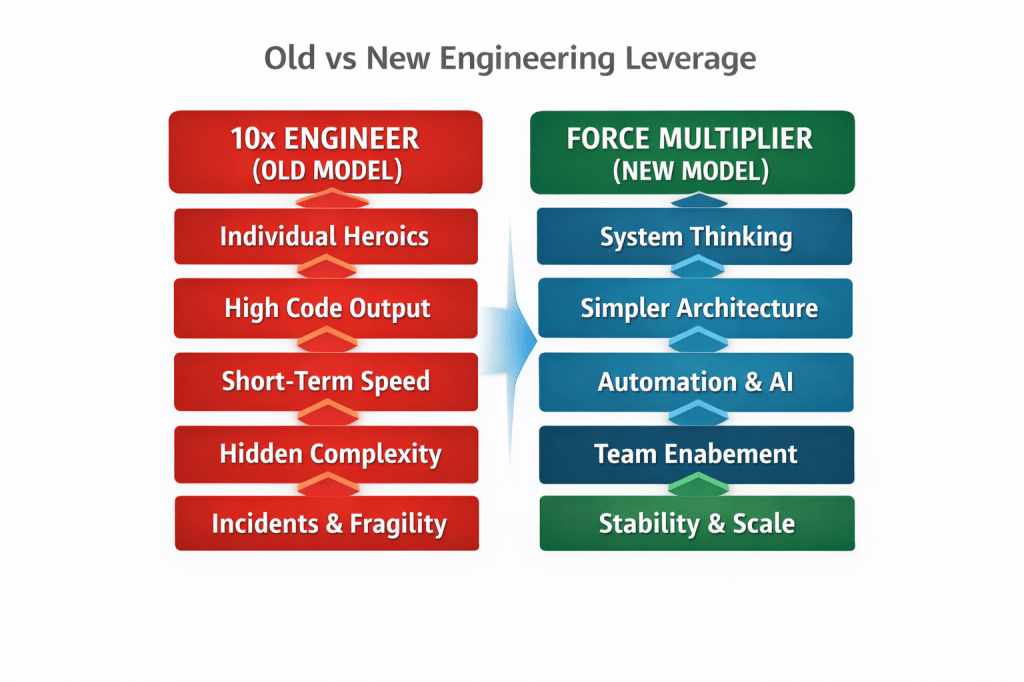
The Old Leverage Model
Historically, engineering impact looked like this:
Engineering Impact = Skill × Speed × Hours
Which rewarded:
- Long hours
- Deep specialization
- Individual output
- Firefighting ability
This led to hero culture:
- One person owning critical systems
- Tribal knowledge
- Burnout cycles
- Bus-factor risk
It worked when systems were smaller.
It collapses at scale.
The New Leverage Model
Today, leverage looks like this:
Modern Engineering Impact =(System Design × Simplicity)× (Automation)× (AI Orchestration)× (Team Clarity)× (Failure Prevention)
This model rewards engineers who:
- Remove complexity
- Design guardrails
- Automate the boring parts
- Enable others
- Reduce production surprises
This is not 10x output.
This is 10x systemic stability.
Diagram 1
The Rise of the Force Multiplier Engineer
If the 10x engineer is fading, who replaces them?
Meet the Force Multiplier Engineer.
This engineer’s impact doesn’t come from doing more work.
It comes from making everyone else more effective.
Core Traits
1️⃣ They Reduce, Not Add
A 10x engineer might say:
“I built a new framework.”
A force multiplier says:
“We removed 4 frameworks.”
They ask:
- Can we delete this?
- Can we simplify this?
- Can we standardize this?
2️⃣ They Design for Boring Systems
They optimize for:
- Predictable behavior
- Easy onboarding
- Fewer surprises
- Clear patterns
Because boring systems scale.
Clever systems break.
3️⃣ They Eliminate Failure Modes Early
Instead of reacting to incidents, they design:
- Rate limits
- Circuit breakers
- Idempotency
- Backpressure
- Observability-first systems
They don’t debug heroically.
They make debugging rarely necessary.
4️⃣ They Use AI as a Leverage Tool, Not a Crutch
They ask:
- Where can AI remove toil?
- Where can AI assist design exploration?
- Where can automation enforce standards?
They orchestrate AI.
They are not replaced by it.
Diagram 2
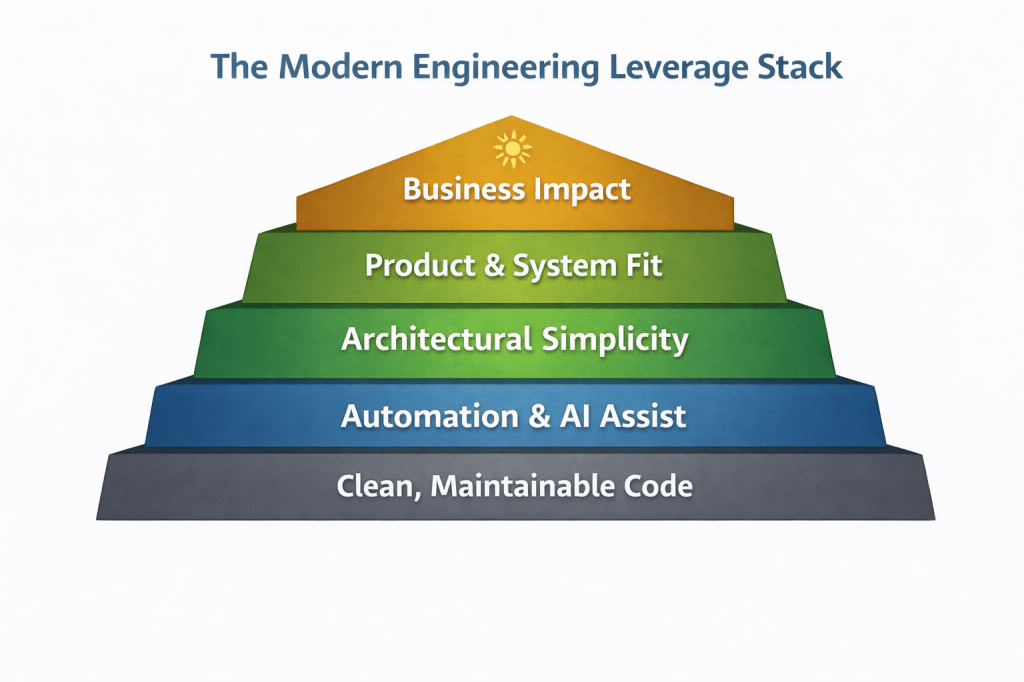
Notice:
Code is the foundation, not the differentiator anymore.
Why the 10x Engineer Can Become a Liability
This is the part people don’t like.
In modern systems, a pure hero engineer can:
- Bypass processes
- Introduce unreviewed complexity
- Build “genius” abstractions no one else understands
- Become a single point of failure
The cost appears later:
- Team paralysis
- Fragile systems
- Slow onboarding
- Fear of touching code
Short-term acceleration.
Long-term drag.
Hiring Is Still Stuck in the Past
Most interviews still ask:
- “What hard problem did you solve?”
- “What performance optimization did you do?”
- “How fast can you code?”
Rarely do they ask:
- “What complexity did you remove?”
- “How did you reduce system risk?”
- “How did you make the team faster without writing more code?”
- “What work did you decide NOT to build?”
That’s the future filter.
Diagram 3
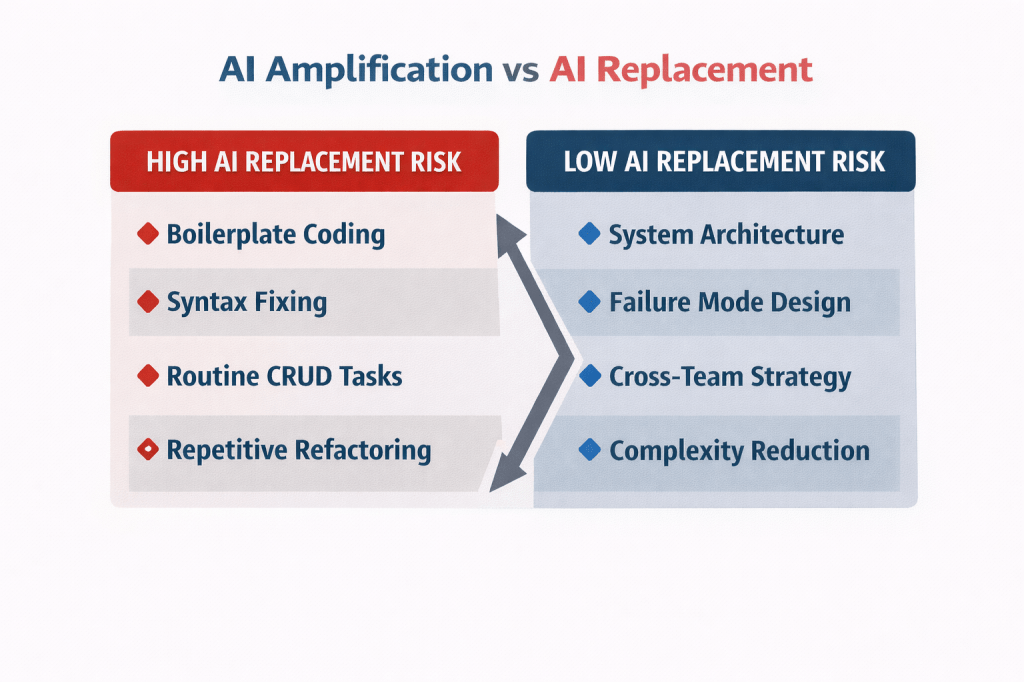
The more your value comes from the bottom half,
the safer your career becomes.
Career Reality: What Engineers Must Adapt To
The industry is shifting from:
“How much can you produce?”
To:
“How much chaos can you prevent?”
The engineers who thrive will:
- Understand systems, not just code
- Think in failure modes
- Design for operability
- Use AI as leverage
- Align technical decisions with business outcomes
This is senior thinking — even at mid-level roles.
The Leadership Shift
Engineering leaders must also evolve.
Stop rewarding:
- Feature count
- Story points
- Lines of code
- Hero incidents
Start rewarding:
- Reduced incidents
- Simpler architectures
- Shorter onboarding time
- Fewer production surprises
- Cross-team clarity
The best teams feel calm, not chaotic.
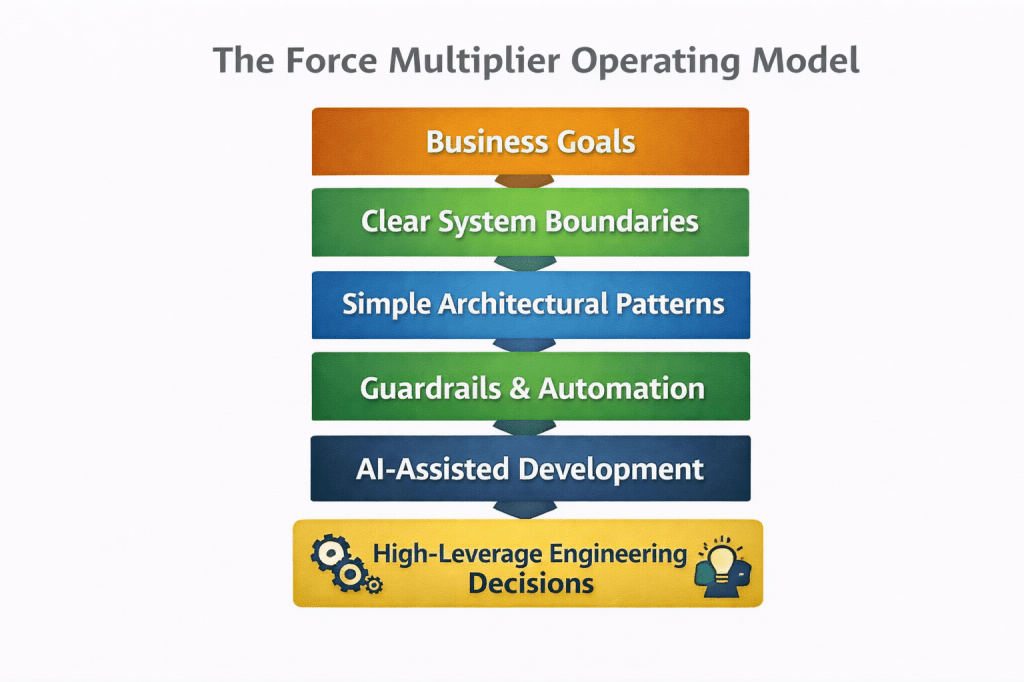
Diagram 4
The Hard Truth
AI did not kill engineering.
It killed low-leverage engineering.
The industry no longer needs more people who can:
- Write boilerplate
- Memorize syntax
- Build yet another abstraction
It needs people who can:
- See the whole system
- Design for the long term
- Remove complexity
- Make teams faster
- Prevent disasters
That is where the real 10x impact lives now.
Final Takeaway
The 10x engineer myth was built for a different era.
The future belongs to:
Engineers who multiply systems, teams, and decisions —
not just output.
That engineer:
- Writes less code
- Deletes more systems
- Prevents more failures
- Aligns more with business
- Uses AI intelligently
That engineer isn’t louder.
But they build companies that don’t collapse.















Leave a comment