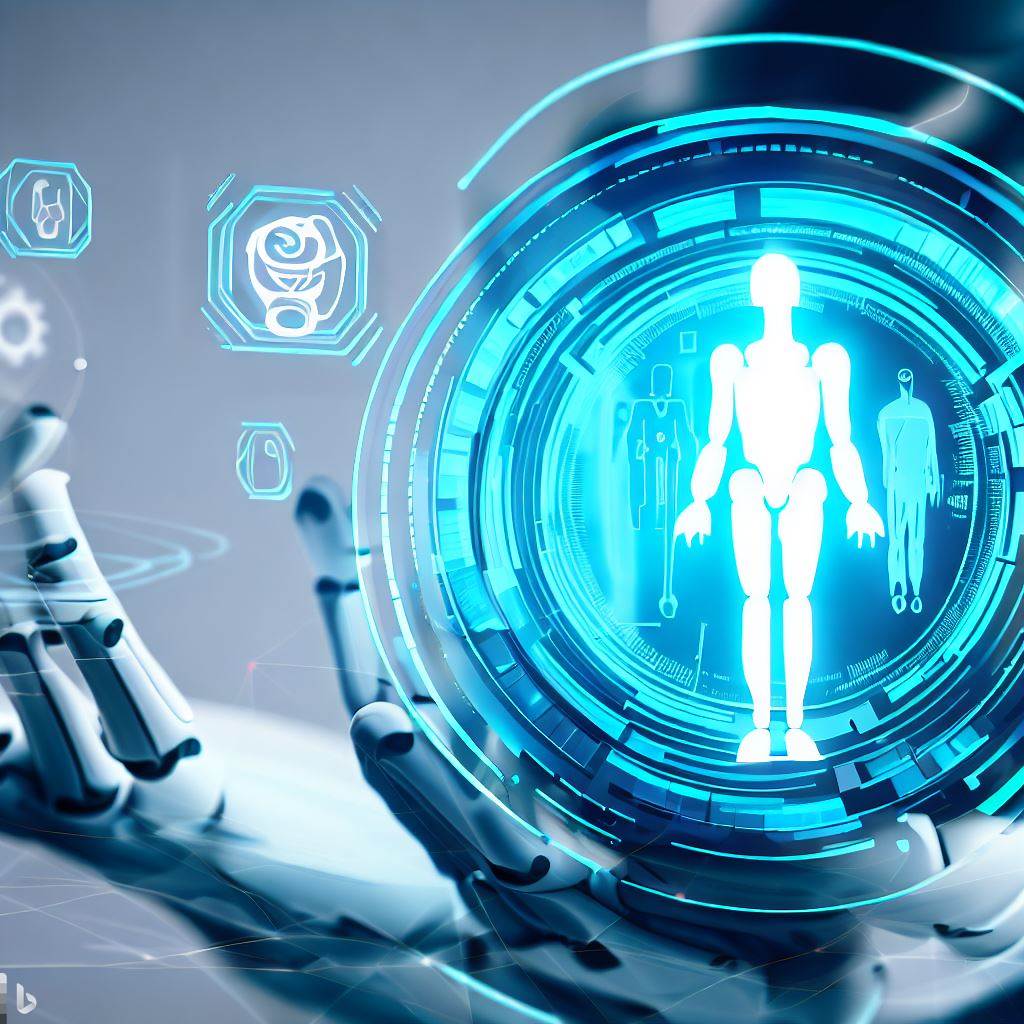
Artificial Intelligence (AI) is revolutionizing various industries, and healthcare is no exception. AI tools are being deployed to enhance diagnostics, improve patient care, streamline administrative tasks, and drive medical research. This blog post explores the remarkable applications of AI in healthcare, examining how these tools are transforming the industry and benefiting patients and healthcare professionals alike.
- Diagnostic Assistance: One of the most promising applications of AI in healthcare is diagnostic assistance. AI-powered tools are aiding healthcare professionals in making accurate and timely diagnoses, leading to better patient outcomes. Machine learning algorithms can analyze vast amounts of medical data, including patient records, images, and test results, to identify patterns and potential indicators of diseases. This assists doctors in making more informed decisions and improving patient outcomes.
- Image Analysis: AI algorithms can analyze medical images, such as X-rays, MRIs, and CT scans, to identify anomalies and assist in the detection of diseases like cancer, cardiovascular conditions, and neurological disorders. This technology improves the accuracy and efficiency of radiologists, enabling faster diagnosis and treatment. For example, deep learning algorithms have shown remarkable capabilities in detecting lung cancer from CT scans with accuracy comparable to or even surpassing human radiologists.
- Pattern Recognition: By analyzing patient data, AI tools can recognize patterns and detect early signs of diseases. For example, AI algorithms can predict the onset of conditions like sepsis, diabetes, or Alzheimer’s disease, allowing healthcare professionals to intervene early and prevent complications. These algorithms can analyze a wide range of data, including vital signs, laboratory results, and patient demographics, to identify high-risk individuals and provide proactive interventions.
- Personalized Treatment: AI tools are enabling personalized treatment plans by considering individual patient characteristics and medical history. This approach enhances patient care and improves treatment outcomes.
- Predictive Analytics: Machine learning algorithms can analyze patient data to predict disease progression and treatment response. This information helps physicians tailor treatment plans based on the patient’s unique needs and characteristics, maximizing the chances of successful outcomes. For example, AI algorithms can analyze data from cancer patients, including tumor characteristics and genomic profiles, to predict the likelihood of response to specific treatments and guide the selection of the most effective therapy.
- Precision Medicine: AI tools enable the identification of specific patient subgroups based on genetic and molecular data. This helps in developing personalized treatments and targeted therapies for conditions like cancer, where the effectiveness of certain treatments varies among individuals. By leveraging AI algorithms to analyze large-scale genomic data, healthcare professionals can identify genetic markers that influence treatment response and design personalized treatment regimens accordingly.
- Administrative Efficiency: AI tools are streamlining administrative tasks and improving operational efficiency in healthcare settings.
- Intelligent Virtual Assistants: Chatbots and virtual assistants powered by natural language processing (NLP) enable patients to interact with AI systems, reducing the burden on healthcare staff. These AI-powered assistants can provide basic medical information, schedule appointments, and answer frequently asked questions, improving patient satisfaction and saving time for healthcare providers. Furthermore, virtual assistants can integrate with electronic health records (EHRs) to retrieve patient information, allowing healthcare professionals to access important data quickly and efficiently.
- Data Management: AI tools can analyze and extract relevant information from electronic health records (EHRs) and other medical documents, reducing the time and effort required for manual data entry. AI algorithms can also identify potential coding errors and discrepancies in medical records, improving accuracy and reducing the risk of administrative mistakes. Additionally, AI-driven data analytics can help healthcare organizations identify trends and patterns in patient data, supporting better resource allocation, and operational decision-making.
- Drug Discovery and Research: AI is accelerating the drug discovery process and facilitating medical research by analyzing vast amounts of scientific literature and experimental data.
- Drug Repurposing: AI algorithms can identify existing drugs that have the potential to be repurposed for treating different diseases. By analyzing molecular structures, pharmacological properties, and clinical data, AI tools can suggest new uses for approved drugs, reducing costs and time in the drug development pipeline. This approach allows researchers to leverage existing knowledge and resources to identify alternative treatments for diseases or explore new indications for existing medications.
- Genomic Analysis: AI enables the analysis of large-scale genomic data, identifying genetic variations associated with diseases. This information aids in understanding disease mechanisms, developing targeted therapies, and predicting patient outcomes based on their genetic profiles. By integrating AI with genomics, researchers can identify genetic markers that influence disease susceptibility and treatment response. This knowledge is instrumental in advancing precision medicine and developing personalized therapies tailored to an individual’s genetic makeup.
- Clinical Trial Optimization: AI tools can optimize the design and execution of clinical trials, leading to more efficient and effective research studies. By analyzing patient data, AI algorithms can identify suitable candidates for clinical trials, improving participant selection and reducing recruitment time. AI can also assist in monitoring and analyzing real-time data during trials, detecting potential adverse events or treatment responses. These insights help researchers make data-driven decisions, ensuring the safety and efficacy of investigational treatments.
- Telemedicine and Remote Monitoring: AI tools are playing a crucial role in enabling telemedicine and remote patient monitoring, particularly in situations where in-person visits are challenging or not possible. AI-powered virtual healthcare platforms allow patients to consult with healthcare professionals remotely, facilitating access to medical advice and reducing the strain on healthcare facilities. Additionally, AI-enabled remote monitoring devices can collect and analyze real-time patient data, such as vital signs and activity levels, alerting healthcare providers to any concerning changes or abnormalities. This proactive approach helps in managing chronic conditions, ensuring timely interventions, and reducing hospital readmissions.
- Mental Health Support: AI tools are being utilized to address the growing need for mental health support. AI-powered chatbots and virtual assistants can provide immediate and confidential support to individuals experiencing mental health issues. These tools employ natural language processing and sentiment analysis to engage in conversations, offer coping strategies, and provide resources for mental health management. While AI cannot replace human therapists, it can serve as a valuable supplement, extending support to a larger number of individuals and reducing the stigma associated with seeking help.
- Ethical Considerations and Challenges: As AI continues to advance in healthcare, it is crucial to address ethical considerations and challenges associated with its implementation. Some key considerations include:
- Data Privacy and Security: The use of AI involves the collection and analysis of sensitive patient data. Healthcare organizations must ensure robust data privacy and security measures to protect patient confidentiality and comply with relevant regulations such as the Health Insurance Portability and Accountability Act (HIPAA).
- Algorithm Transparency and Explainability: AI algorithms should be transparent and explainable to build trust among healthcare professionals and patients. Understanding how AI arrives at its conclusions is essential, especially in critical medical decision-making processes.
- Bias and Fairness: AI algorithms can be susceptible to biases present in the data used for training. These biases could result in disparate healthcare outcomes for different demographic groups. Ongoing efforts are necessary to mitigate bias and ensure fairness in AI algorithms to provide equitable healthcare for all patients.
- Regulatory Compliance: The development and deployment of AI tools in healthcare must comply with regulatory frameworks and guidelines. Regulators need to adapt and establish clear guidelines for evaluating the safety, efficacy, and ethical implications of AI in healthcare.
In conclusion, Artificial Intelligence tools have tremendous potential to transform healthcare by improving diagnostics, enabling personalized treatment, streamlining administrative tasks, accelerating medical research, and supporting telemedicine and mental health support. However, it is essential to navigate the ethical considerations and challenges associated with AI implementation to ensure responsible and beneficial use of these technologies. By leveraging AI in healthcare effectively, we can enhance patient outcomes, optimize resource allocation, and create a more patient-centered and efficient healthcare system.
Please do not forget to subscribe to our posts at www.AToZOfSoftwareEngineering.blog.
Listen & follow our podcasts available on Spotify and other popular platforms.
Have a great reading and listening experience!




















Leave a comment