
🔍 Introduction
You write code. You click “Deploy.” Your app is live. Magic? Not really.
For many developers—especially those new to cloud-native development—the deployment process feels like a black box. But understanding what happens under the hood when you deploy an application to the cloud (AWS, Azure, GCP, or others) is crucial for performance, scalability, troubleshooting, and cost optimization.
This blog post peels back the layers of that “Deploy” button, walking you through the behind-the-scenes journey of your code as it travels from your IDE to production.
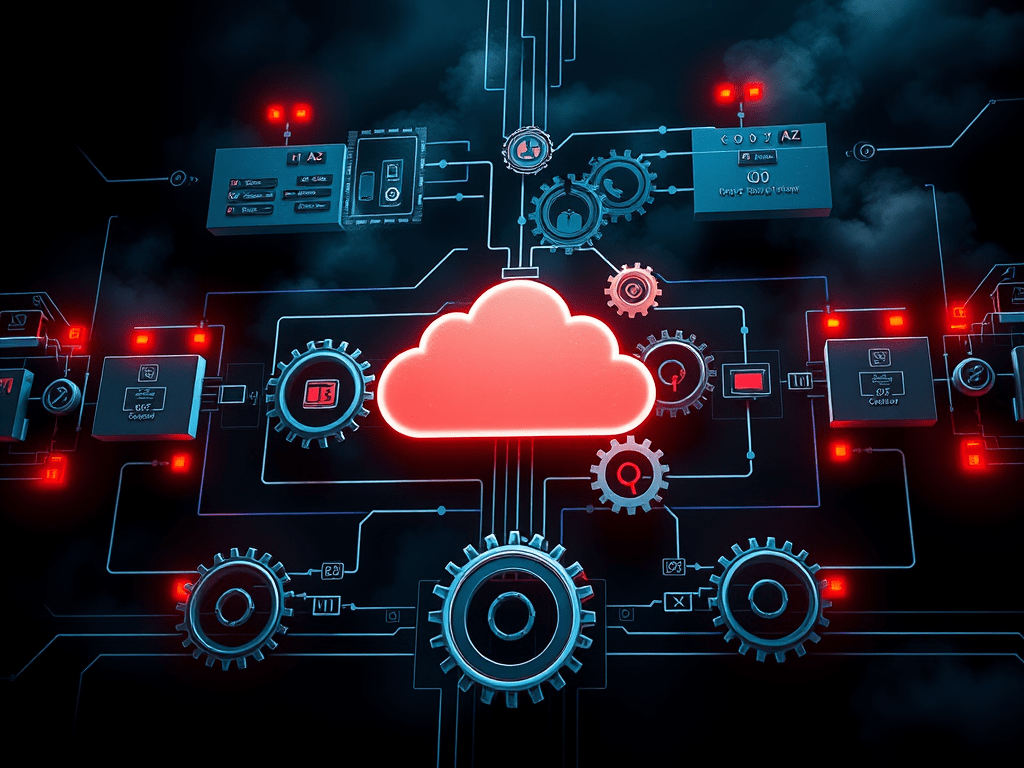
🚀 The Big Picture: Cloud Deployment Pipeline Overview
At a high level, deploying to the cloud typically involves:
- Build Phase – Compiling your code and creating an artifact (binary, Docker image, etc.)
- Package Phase – Preparing the artifact for deployment
- CI/CD Pipeline Trigger – Code push or pull request starts an automated pipeline
- Infrastructure Provisioning – Servers, containers, storage, and networking set up
- Artifact Deployment – App binaries or images placed into production environments
- Runtime Configuration – Environment variables, secrets, config files injected
- Load Balancing and DNS – Your app becomes reachable via public or private endpoints
- Monitoring and Logging – Metrics and logs start flowing in real time
Let’s explore each phase in depth.
🔧 1. Build Phase
This step involves compiling source code, running unit tests, and producing a deployable artifact.
- Languages like Java: Compiled into JARs or WARs.
- Node.js/Python: Packaged as a zip or a Docker image.
- Tools used: Maven, Gradle, npm, pip, Docker CLI, etc.
In modern pipelines, this usually happens inside a CI/CD tool like GitHub Actions, GitLab CI, Jenkins, or CircleCI.
📦 2. Package Phase
Your application needs all its dependencies and runtime information bundled.
- Dockerization: A Dockerfile defines your app’s environment, dependencies, ports, and entrypoint.
- Multi-stage builds: Used to reduce image size and isolate build from runtime.
- Artifact repositories: DockerHub, ECR (AWS), GCR (Google Cloud Registry), or Nexus store your final image.
⚙️ 3. CI/CD Pipeline Trigger
A change in your Git repo (merge to main, tag push, or PR) typically triggers a pipeline.
- Pipeline steps include:
- Code checkout
- Run linters and unit tests
- Security scans (e.g., Snyk, SonarQube)
- Build and push Docker image
- Infrastructure-as-Code execution (e.g., Terraform, AWS CloudFormation)
- Deployment command (e.g.,
kubectl apply,ecs deploy,serverless deploy)
This stage is highly automated for speed, consistency, and reliability.
🏗️ 4. Infrastructure Provisioning
Your app needs an environment to run in. Options include:
| Infrastructure Type | Platform Examples | Description |
|---|---|---|
| Virtual Machines | AWS EC2, GCP Compute Engine | Manual scaling and setup |
| Containers | AWS ECS, Kubernetes, Azure AKS | Lightweight, orchestration ready |
| Serverless | AWS Lambda, Azure Functions | Event-driven, auto-scaling |
Infrastructure-as-Code tools (like Terraform) are used to:
- Define VPC, subnets, and security groups
- Create compute and storage resources
- Set up databases, queues, caches, etc.
🚢 5. Artifact Deployment
Once the environment is ready, the artifact is deployed:
- Containerized apps: Pulled from a registry and run on Kubernetes pods, ECS tasks, etc.
- VM-based apps: Copied via SCP, Ansible, or SSH and executed on boot.
- Serverless functions: Uploaded to a cloud provider with metadata and handler code.
Zero-downtime strategies like blue-green deployment or canary rollout might be used.
🔐 6. Runtime Configuration
Your app rarely runs standalone—it needs context.
- Environment variables: Store database URLs, secrets, and API keys.
- Secrets managers: AWS Secrets Manager, HashiCorp Vault.
- Configuration managers: Spring Cloud Config, AWS AppConfig, etc.
Everything is injected at runtime to avoid hardcoding sensitive data.
🌍 7. Load Balancing, Networking, and DNS
Now your app is running—but it still needs to be reachable.
- Load Balancers: Distribute traffic among replicas (e.g., ALB, NGINX, Envoy)
- Service Discovery: Kubernetes Services, AWS Cloud Map help locate your app
- DNS Mapping: Cloudflare, Route53, or Azure DNS maps domains to IPs
- SSL/TLS: Handled via ACM (AWS), Let’s Encrypt, etc. for HTTPS
📊 8. Monitoring, Logging, and Alerts
Once deployed, continuous visibility is critical.
- Monitoring:
- Prometheus + Grafana (Kubernetes)
- CloudWatch (AWS), Azure Monitor
- Datadog, New Relic, etc.
- Logging:
- ELK Stack (Elasticsearch, Logstash, Kibana)
- Fluentd, Loki, Cloud-native logging
- Alerting:
- Opsgenie, PagerDuty, Slack/Webhook integrations
🧠 Final Thoughts
Modern cloud deployments are elegant but complex. Understanding the orchestration behind the scenes gives you:
- Better debugging and troubleshooting skills
- Improved DevOps collaboration
- Stronger cost and performance optimization awareness
The next time you click “Deploy”, picture the dozens of automated steps happening in seconds to make your app globally available.
✅ TL;DR – What Happens When You Deploy to the Cloud?
| Stage | What Happens |
|---|---|
| Build | Code compiles, unit tests run |
| Package | Artifact created (e.g., Docker image) |
| CI/CD Triggered | Pipeline executes deploy logic |
| Infrastructure Set Up | Compute, storage, and network provisioned |
| Artifact Deployed | App code or container goes live |
| Runtime Config Applied | Secrets, env variables injected |
| Networking Hooked Up | DNS, load balancing configured |
| Monitoring Activated | Logs and metrics flow to dashboards |

















Leave a comment