
1. Introduction: Beyond the Cloud
For decades, computing has undergone a remarkable transformation. From mainframes to client-server architectures, and later to the dominance of the cloud, each step has been about centralizing or decentralizing power to meet the needs of businesses and users.
But the rise of real-time applications—autonomous cars, augmented reality (AR), industrial IoT, smart cities—exposed the limitations of the cloud. Centralized cloud data centers, even with global coverage, cannot meet the millisecond response times demanded by today’s systems.
Enter edge and fog computing, paradigms designed to bring computation closer to where data is generated, offering lower latency, improved bandwidth efficiency, and greater security.

2. The Problem: Why Cloud Alone Isn’t Enough
The cloud revolutionized scalability and accessibility, but it wasn’t built for every scenario:
- Latency sensitivity: In autonomous vehicles, even a 100 ms delay can be catastrophic.
- Bandwidth bottlenecks: Billions of IoT devices generate zettabytes of data—pushing all of it to the cloud is impractical and costly.
- Privacy & compliance: Regulations like GDPR require data localization and minimize data transfers.
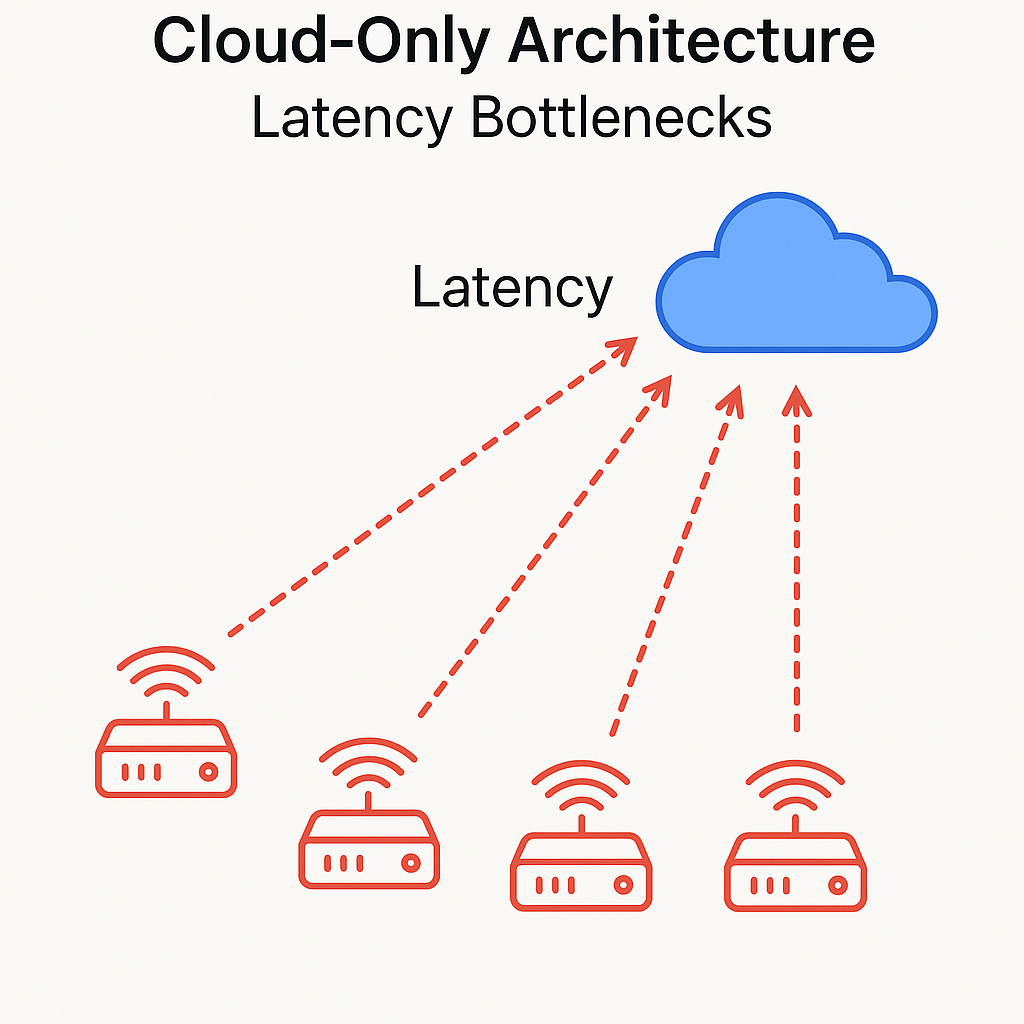
A new distributed computing approach was needed—process what you can locally, send only what’s necessary to the cloud.
3. What is Edge Computing?
Edge computing moves computation closer to data sources—smartphones, IoT devices, or local gateways—reducing latency and network dependence.

Examples:
- Autonomous Vehicles: Vehicles process sensor data instantly to make braking decisions.
- Retail (Amazon Go): Cameras and sensors process customer behavior in real-time to enable checkout-free shopping.
- Healthcare: Wearables monitor heart rate and trigger local alerts before sending aggregated data to the cloud.
Benefits:
- Millisecond response times.
- Reduced cloud bandwidth usage.
- Enhanced privacy since raw data doesn’t leave the local device.
4. What is Fog Computing?
While edge handles real-time decisions on the device, fog computing introduces an intermediate layer of fog nodes (local servers, routers, gateways). These nodes preprocess, aggregate, and filter data before passing it to the cloud.
Think of fog computing as a bridge:
- Edge = device-level decision-making.
- Fog = neighborhood-level coordination.
- Cloud = global analysis, training, and storage.
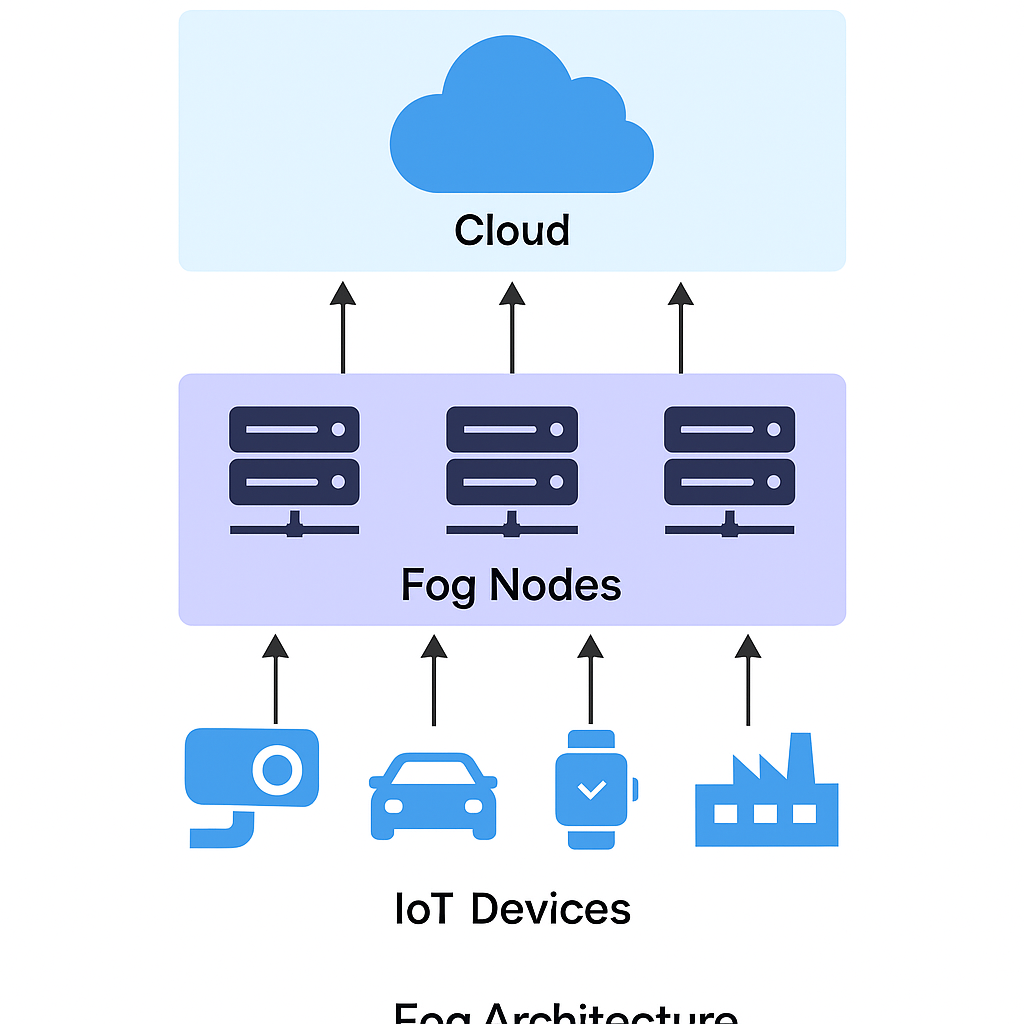
Example: In a smart city, traffic lights and sensors communicate with nearby fog nodes for real-time traffic optimization. Only summary data is sent to the cloud for long-term analysis.
5. Cloud vs Edge vs Fog: Key Differences
| Feature | Cloud | Edge | Fog |
|---|---|---|---|
| Latency | High (ms–sec) | Ultra-low (sub-ms) | Low (ms) |
| Scalability | Very high | Limited by device power | Moderate (local clusters) |
| Use Case | Batch analytics, storage | Real-time decision-making | Local aggregation, coordination |
| Security | Centralized risk | High privacy (local data) | Moderate, but fog nodes add new surfaces |
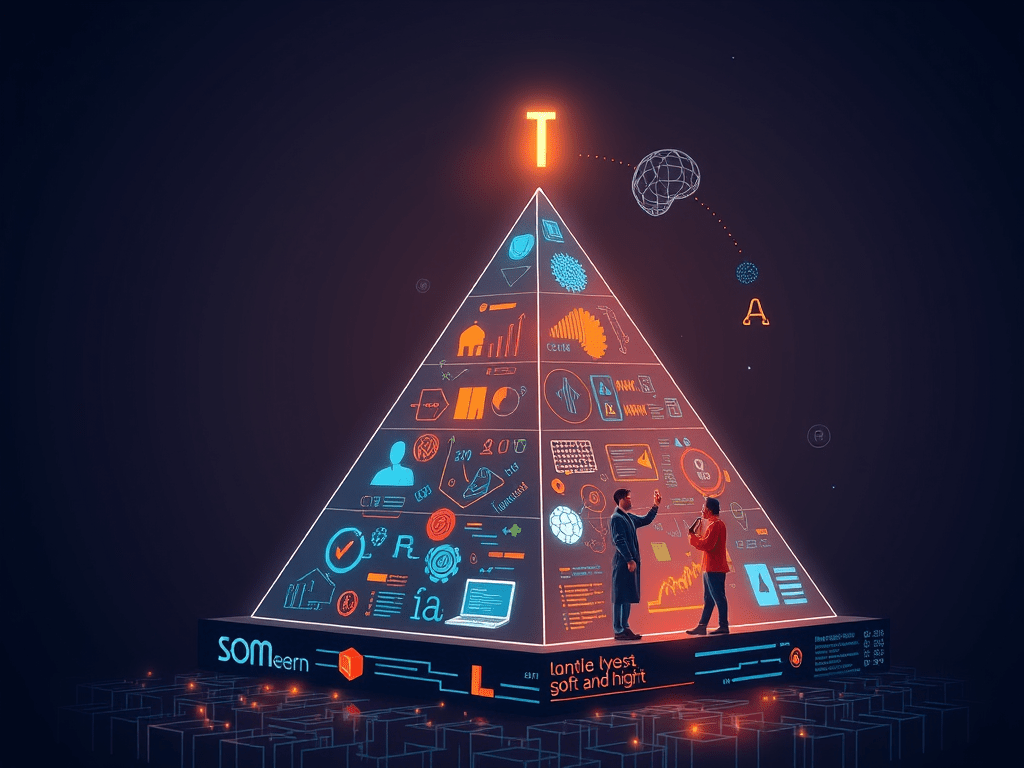
Together, they form a hierarchical model of distributed computing.
6. Real-World Use Cases
- Healthcare: Fog nodes preprocess wearable data and alert hospitals only when anomalies are detected.
- Autonomous Vehicles: Cars communicate with nearby fog nodes to coordinate traffic flow, not just cloud servers.
- Industrial IoT: Machines in factories run predictive maintenance models on-site.
- Retail: Personalized ads shown instantly based on in-store shopper behavior.
- Smart Cities: Energy grids optimize consumption at the neighborhood level.
7. Technical Challenges & Research Directions
While powerful, edge and fog bring new challenges:
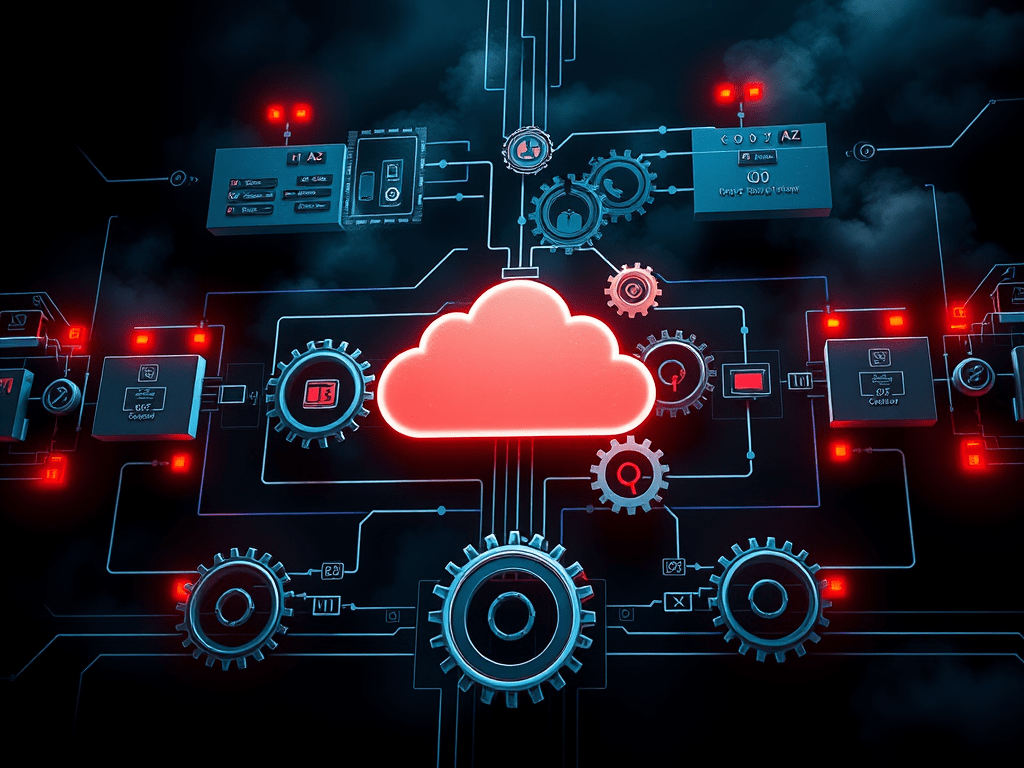
- Orchestration: Managing workloads across cloud, fog, and edge requires distributed orchestration (Kubernetes at the edge, K3s, Open Horizon).
- Data consistency: State synchronization across thousands of nodes is complex.
- Security: Fog nodes become new attack vectors. Solutions include zero-trust architecture and confidential computing.
- AI at the edge: Deploying ML models on small devices requires model pruning, quantization, and TinyML techniques.
- Energy efficiency: Edge devices often run on constrained power sources.
8. Future Outlook: Hybrid Architectures
The future isn’t about replacing the cloud, but about layering it with fog and edge.
- 6G networks will supercharge edge-fog ecosystems.
- AI-native devices will process models locally with cloud updates.
- Quantum + Neuromorphic computing may eventually blend with edge systems for brain-like decision-making.
The hybrid model—Cloud + Fog + Edge—will define the next decade of computing.
9. Conclusion
The cloud gave us global scalability. But the future is layered, distributed, and hybrid.
- Cloud: best for scale and long-term storage.
- Fog: best for local coordination and aggregation.
- Edge: best for instant decisions.
As software engineers and technology leaders, mastering distributed computing across all three layers will be essential for designing the applications of tomorrow.












Leave a comment