
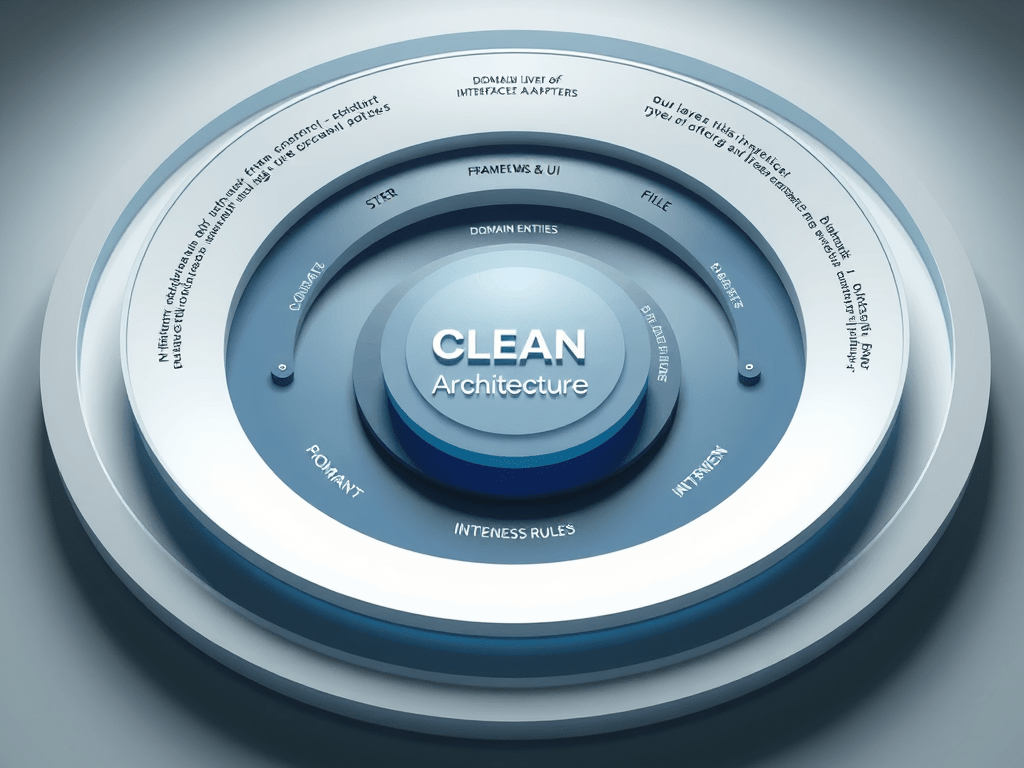
Why Most Teams Misapply It — And How to Build Systems That Actually Scale in 2026
If you’ve been in enterprise engineering long enough, you’ve seen this moment:
A team proudly presents:
- Strict layer boundaries
- Interfaces everywhere
- Ports & adapters
- Zero framework leakage
They say:
“We follow Clean Architecture.”
Six months later:
- Velocity drops
- Onboarding is painful
- Refactors are terrifying
- Nobody understands the flow without a diagram
Here’s the hard truth:
Clean Architecture is not the problem.
Misapplied abstraction is.
And in 2026 — with AI-assisted development, distributed systems, and high iteration velocity — architectural overengineering is more expensive than ever.
This article goes deep:
- What Clean Architecture actually guarantees
- Where it creates leverage
- Why it collapses under cargo-cult adoption
- The cognitive science of architecture
- Volatility-based design as a superior mental model
- A pragmatic architecture blueprint for modern backend systems
- A production-grade case study
- How AI changes architectural economics
This is not a beginner article.
Let’s start properly.
Part 1 — What Clean Architecture Actually Is
Clean Architecture was popularized by Robert C. Martin.
Its core idea:
Dependencies point inward.
Meaning:
- Business rules do not depend on frameworks.
- Domain does not depend on databases.
- UI does not leak into use cases.
The model is often shown as concentric layers.
Diagram 1 — Clean Architecture Layers
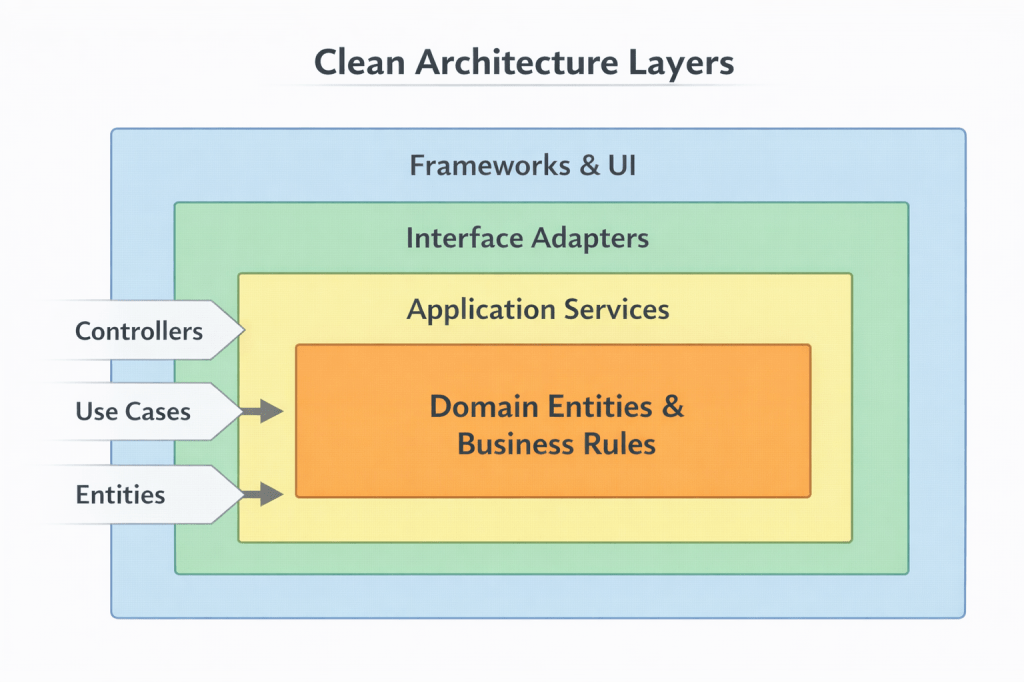
This model defines:
Outer Layer
- Frameworks
- UI
- Web adapters
Middle Layers
- Interface adapters
- Application services
Inner Core
- Domain entities
- Business rules
In theory:
- You can swap the database.
- You can swap the UI.
- You can test core logic independently.
- Your business rules outlive frameworks.
Conceptually elegant.
But architecture lives in trade-offs.
Part 2 — Why Clean Architecture Emerged
To understand misuse, we must understand origin.
Early enterprise systems had:
- Framework lock-in
- ORMs bleeding into domain logic
- Controllers containing business rules
- Tight coupling between UI and persistence
Testing was expensive.
Refactoring was dangerous.
Clean Architecture responded to real pain:
- Protect the core.
- Isolate change.
- Reduce framework dependency.
It was a defensive reaction to chaotic systems.
But many teams today adopt it reactively — without the chaos that originally justified it.
Part 3 — Where Teams Begin to Go Wrong
The problem is not the inward dependency rule.
The problem is abstraction inflation.
Teams often:
- Introduce interfaces before multiple implementations exist
- Create use-case layers for trivial CRUD
- Add mappers for simple entity pass-through
- Create output ports with no real alternative presenter
This leads to ceremony without benefit.
Diagram 2 — Over-Engineered Flow
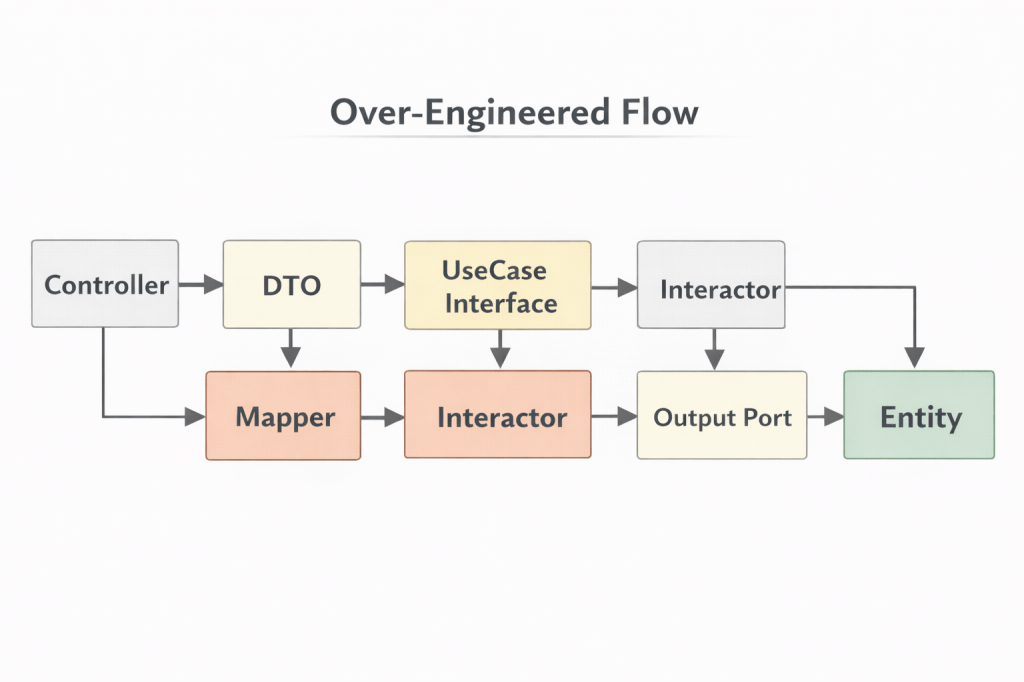
Notice the path:
Controller → DTO → UseCase Interface → Interactor → Output Port → Presenter → Entity
Every box represents:
- A file
- A mental hop
- A debugging step
Ask yourself:
Does this complexity correspond to domain complexity?
Or was it copied from a conference slide?
Architecture must reflect system entropy — not architectural ideology.
Part 4 — The Cognitive Load Problem
Architecture is not just about code.
It is about human comprehension.
Cognitive load theory tells us:
Humans can only hold a limited number of conceptual elements in working memory.
When your request path requires:
- 8 file transitions
- 3 indirections
- 2 mapping layers
You are not increasing modularity.
You are increasing cognitive tax.
This slows:
- Code review
- Onboarding
- Debugging
- Feature iteration
High abstraction density reduces team throughput.
That is architectural debt.
Part 5 — False Decoupling
A common argument:
“We need interfaces so we can swap implementations later.”
But how often do you swap:
- Databases?
- Frameworks?
- Messaging systems?
In most organizations:
Database choice changes rarely.
Framework choice changes rarely.
But business rules change constantly.
So why abstract the stable parts more aggressively than the volatile parts?
That’s inverted investment.
Part 6 — Volatility Is the Real Axis of Architecture
This is the central thesis:
Architecture should follow volatility.
Not ideology.
Not aesthetics.
Not conference diagrams.
It should follow change frequency.
Diagram 3 — Volatility-Based Architecture
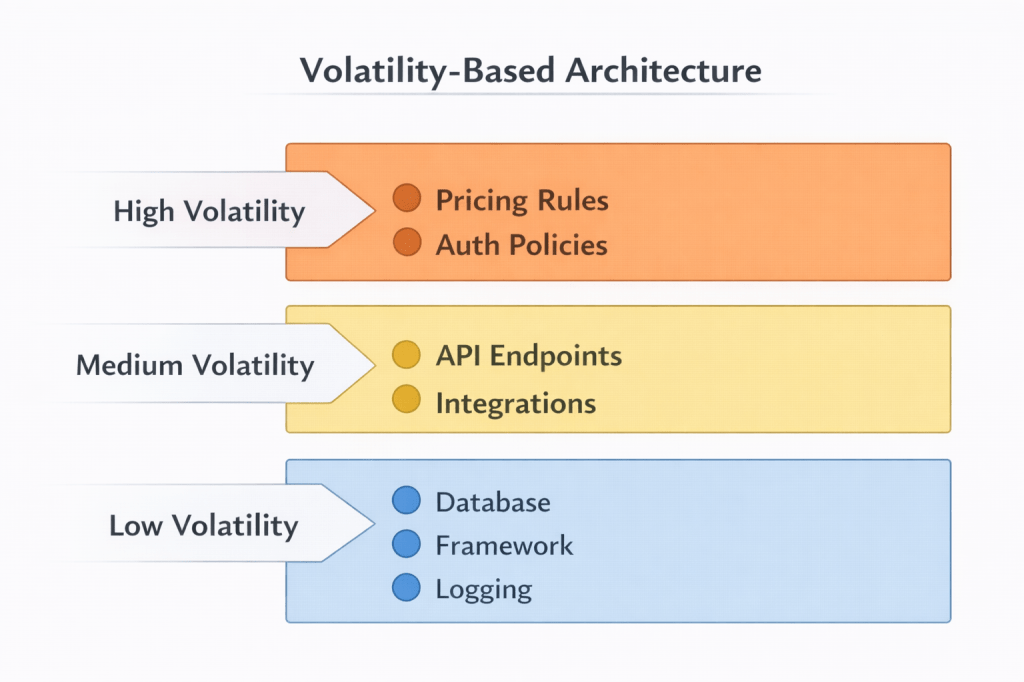
We divide system components into:
High Volatility
- Pricing rules
- Authorization policies
- Business workflows
Medium Volatility
- API endpoints
- Integration adapters
Low Volatility
- Database engine
- Framework
- Logging
Architectural investment should be proportional.
Isolate high volatility.
Keep low volatility pragmatic.
This is superior to rigid layer obsession.
Part 7 — Feature-Centric Structure vs Layer-Centric Structure
Traditional layered packaging:
controller/service/repository/dto/mapper/
This causes horizontal sprawl.
A single feature crosses five directories.
Instead, modern systems benefit from feature-based grouping.
Diagram 4 — Feature-Centric Structure
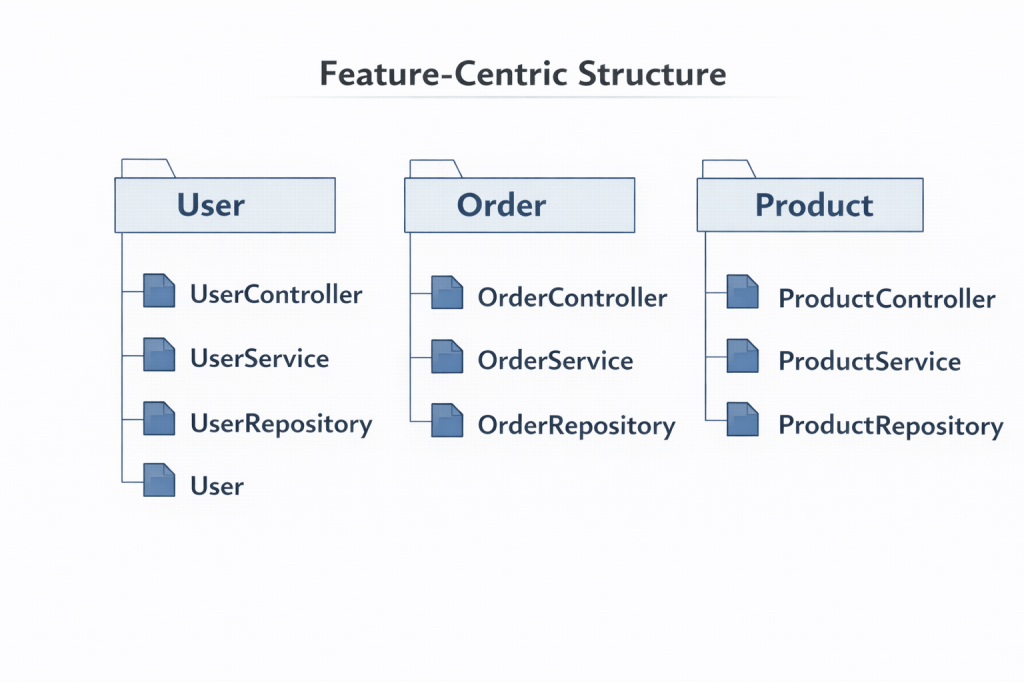
Now structure becomes:
user/order/product/
Each contains:
- Controller
- Service
- Repository
- Entity
Benefits:
- Localized reasoning
- Easier refactoring
- Reduced navigation time
- Clear bounded context
This aligns better with domain-driven thinking.
Part 8 — Case Study: User Registration System
Let’s walk through a realistic backend example.
Scenario
You are building:
User registration with:
- Validation
- Duplicate detection
- Email confirmation
- Role assignment
Over-Engineered Implementation
Files:
- CreateUserUseCase
- CreateUserInteractor
- CreateUserInputPort
- CreateUserOutputPort
- CreateUserPresenter
- CreateUserRequestDTO
- CreateUserResponseDTO
- UserFactory
- UserMapper
- UserRepositoryInterface
- UserRepositoryImpl
- UserEntity
Total: 12–15 files.
For one feature.
Pragmatic Implementation
- UserController
- UserService
- UserRepository
- User
That’s it.
Diagram 5 — Simple User Registration Flow
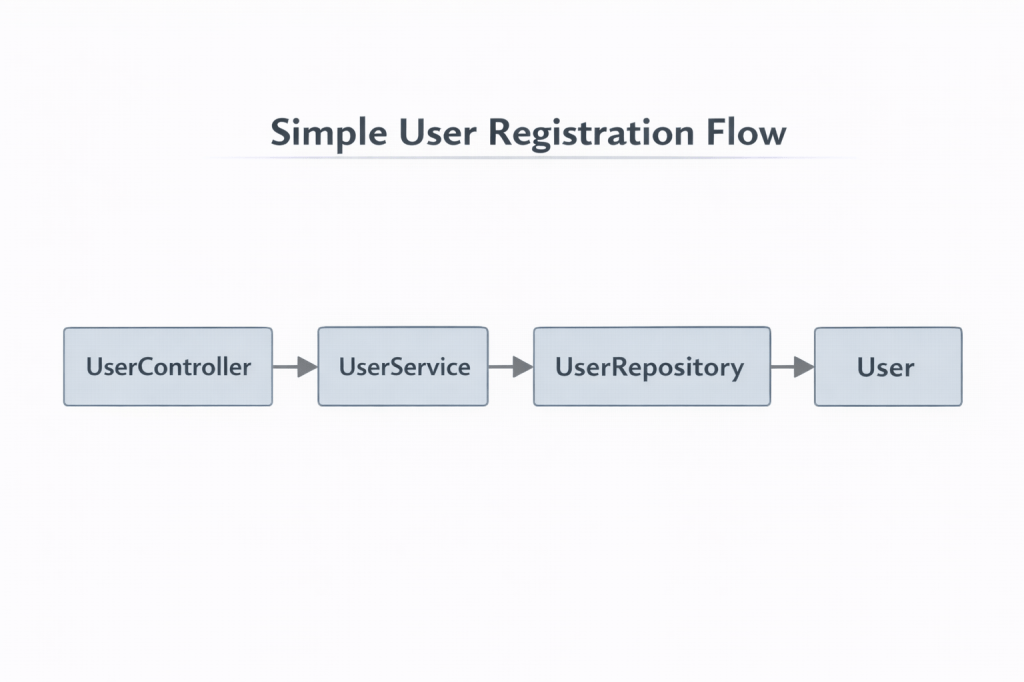
Flow:
UserController → UserService → UserRepository → User
If complexity increases later:
Refactor then.
Architecture should evolve with complexity — not anticipate imaginary complexity.
Part 9 — The Delivery Paradox
Over-architecture creates a dangerous feedback loop:
- Teams spend months designing abstractions.
- Delivery slows.
- Feedback decreases.
- Assumptions go unvalidated.
- Abstractions become wrong.
- Refactoring becomes expensive.
Architecture should accelerate learning, not delay it.
Part 10 — Clean Architecture in High-Complexity Domains
Now let’s be precise.
Clean Architecture works extremely well in:
- Financial transaction systems
- Insurance rule engines
- Healthcare compliance platforms
- Multi-tenant SaaS with heavy policy logic
Why?
Because the domain core is rich and volatile.
If business logic spans:
- Hundreds of invariants
- Regulatory constraints
- Pluggable rule sets
Then isolating domain becomes critical.
This is where Clean Architecture shines.
But most internal CRUD systems are not that.
Part 11 — The AI Factor
In 2026:
- AI writes boilerplate.
- AI generates test stubs.
- AI refactors layers.
So the cost of abstraction creation drops.
But the cost of understanding remains human.
AI changes typing cost.
It does not change cognitive limits.
So clarity becomes more valuable than ceremony.
Part 12 — A Modern Pragmatic Architecture Blueprint
Here’s what works today:
1. Organize by Feature
Locality > purity.
2. Isolate High-Volatility Logic
Extract:
- Pricing engines
- Policy engines
- Workflow orchestrators
3. Avoid Interface Explosion
Add interfaces when:
- Multiple implementations exist
- You need polymorphism
- You need test seams
Not “just in case.”
4. Keep Domain Rich — If It’s Actually Rich
Don’t force behavior into entities if domain is thin.
Architecture should mirror domain complexity.
Part 13 — Metrics That Actually Matter
Don’t measure:
- Layer count
- Abstraction depth
- Interface ratio
Measure:
- Onboarding time
- Change lead time
- Defect escape rate
- Mean time to refactor
Architecture is successful if these improve.
Part 14 — Senior-Level Architectural Maturity
Junior engineers optimize for patterns.
Mid-level engineers optimize for structure.
Senior engineers optimize for change cost.
The highest form of architectural thinking is:
Reducing future regret.
Not maximizing theoretical elegance.
Final Reflection
Clean Architecture is not wrong.
Blind Clean Architecture is.
If your architecture:
- Increases cognitive load
- Slows feature delivery
- Creates ceremony without volatility protection
Then it is not clean.
It is ornamental.
Architecture should:
- Protect what changes most
- Simplify what changes least
- Reduce human friction
- Enable team scaling
That is pragmatic engineering.

















Leave a comment