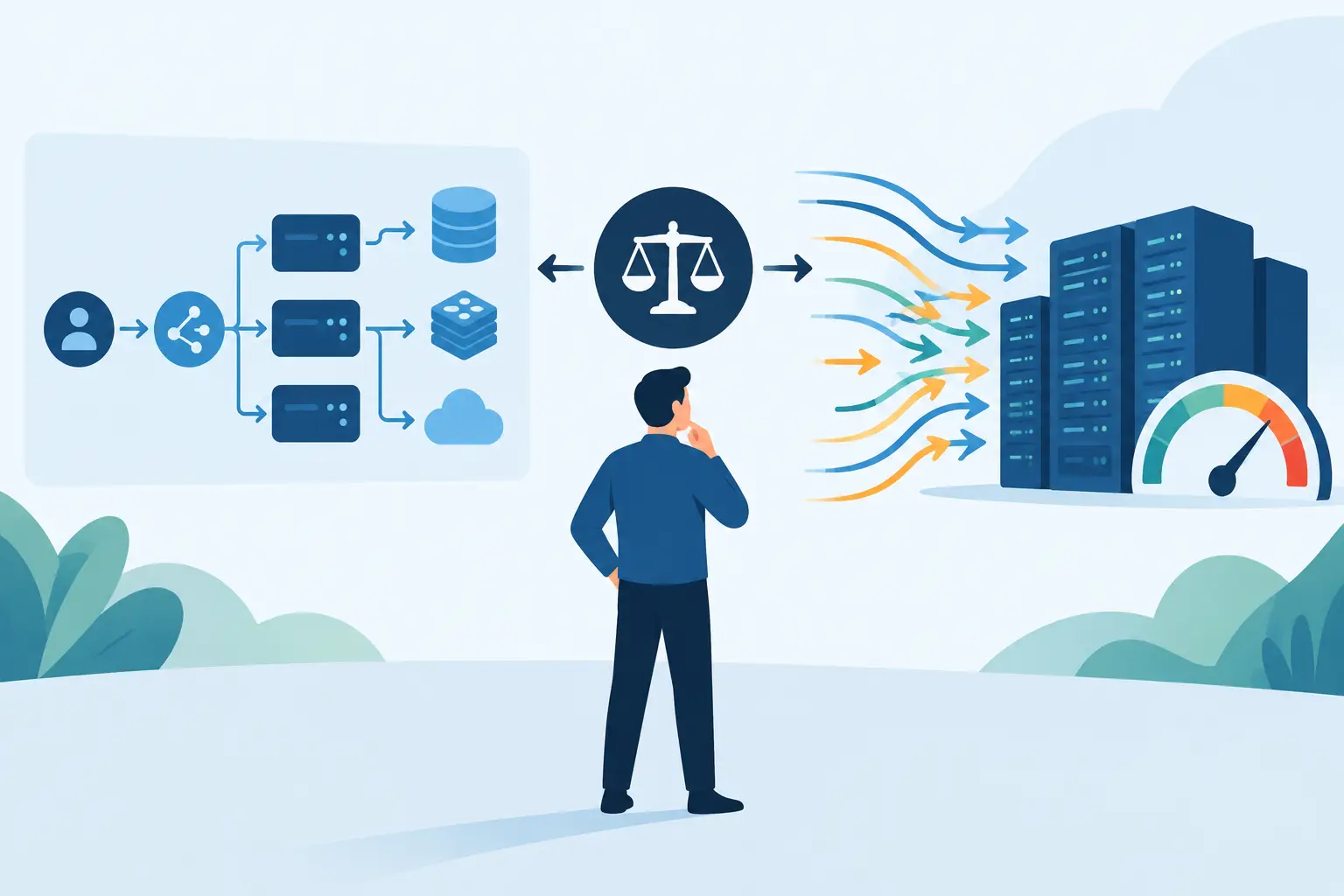
System design connects the choices engineers make about services, APIs, data, infrastructure, and teams. This guide brings together practical articles for working software engineers and tech leads, from building web applications and choosing architectural patterns to handling distributed state, reliability, and scale.
The guide is organised from fundamentals to advanced topics, so you can build context before exploring more specialised challenges. Use the sections to find relevant material for a design decision, a production issue, or a change in team practice. It is updated as new articles are published, helping the guide grow alongside the blog.
Start with these
- Web Service Best Practices for Reliable, Scalable Design – Covers caching, distributed architecture, and automated testing for reliable, scalable web services.
- Mastering Scalable Software Architecture: Key Insights – Introduces load balancing, caching, asynchronous processing, and auto-scaling for growing traffic and data demands.
- APIs in Software Engineering: A Complete Guide – Covers API versioning, OAuth2, encryption, caching, and rate limiting to address integration risks.
What this guide covers
- How do backend systems fit together?
- Which software architecture should you choose?
- How should systems store and share data?
- How do you scale and operate systems?
- How do you govern advanced systems?
How do backend systems fit together?
Start with web services, application architecture, APIs, and common approaches to building and delivering backend applications.
- Web Service Best Practices for Reliable, Scalable Design – Covers caching, distributed architecture, and automated testing for reliable, scalable web services.
- Mastering Scalable Software Architecture: Key Insights – Introduces load balancing, caching, asynchronous processing, and auto-scaling for growing traffic and data demands.
- APIs in Software Engineering: A Complete Guide – Covers API versioning, OAuth2, encryption, caching, and rate limiting to address integration risks.
- REST vs GraphQL: Which API is Right for You? – Compares REST and GraphQL query models, caching, query complexity, and security considerations.
- Building Scalable Web Apps with React.js, Java, and MongoDB – Outlines a React, Spring Boot, and MongoDB application using REST APIs, validation, indexes, and containers.
- Building a Modern Web Application: A Comprehensive Guide – Guides building a React, Spring Boot, and MongoDB application with REST, JWT, indexes, and Docker.
- Top Full Stack Development Tips You Need to Know – Recommends database indexing, caching, and asset optimization alongside responsive and accessible front-end design.
- SOA in Practice: Real-world Implementation Strategies – Introduces SOA service boundaries, reusable services, interface definition, and service orchestration.
- Demystifying Serverless Computing: Advantages & Examples – Introduces pay-as-you-go event-driven functions that scale automatically, with image-processing examples.
- Serverless Computing: Benefits and Practical Examples – Explains serverless functions for image processing and scheduled tasks, with pay-as-you-go scaling.
Which software architecture should you choose?
Compare architectural styles and learn when modular design, microservices, event-driven systems, or resilience patterns may fit.
- Unlocking the Advantages of Microservices Architecture – Describes microservices benefits including independent scaling, fault isolation, and faster CI/CD releases.
- Microservices: How Smart Teams Avoid Over-Engineering – Recommends starting with a modular monolith, enforcing boundaries, and extracting services when needed.
- Microservices Architecture: Why Most Are Over-Engineered – Examines the overhead of Clean Architecture and recommends feature-oriented organisation and isolating volatile business logic.
- Microservices Are Killing Engineering Velocity – Explains how microservices can hinder engineering velocity and presents modular monoliths as an alternative starting point.
- Event-Driven Architecture: Truths and When Not to Use It – Discusses event-driven system trade-offs, including hidden coupling, consistency, tracing, idempotency, and synchronous flows.
- Ghost Architecture: The Hidden Layer for Fast, Scalable Software – Describes retries, circuit breakers, caching, and graceful fallbacks for handling traffic spikes and failures.
How should systems store and share data?
Explore database choices, migrations, consistency, and coordination challenges that arise as data moves across systems.
- Kafka: Why Real-Time Platforms Collapse at Scale – Explains Kafka scale failures involving replay storms, hot partitions, and consumer lag, with replay separation and schema compatibility.
- Distributed Consensus: Fixing Server-Side State at Scale – Discusses Raft quorum commits, leader leases, and jittered backoff to reduce consensus-related outages.
- Distributed Data Consistency: Why Systems Fail at Scale – Explains how sagas and idempotency can help address duplicate messages and partial failures.
- Relational to NoSQL Migration: Exporting Database Data – Introduces relational-to-NoSQL migration concerns, including mapping tables to documents, defining indexes, and validating data.
- ETL Migration: RDBMS to NoSQL Explained – Outlines RDBMS-to-NoSQL migration using ETL or CDC, denormalization, bulk loading, and data validation.
- Migrating from Relational to NoSQL: Step-by-Step Guide – Guides relational-to-NoSQL migration through table mapping, relationship indexing, and data-integrity validation.
- Apache Cassandra in the NoSQL Era – Describes Cassandra horizontal scaling, replication, and tunable consistency for large datasets.
- AI Database Integration: Boosting Efficiency and Innovation – Describes machine-learning query optimization, automated indexing, and data-quality safeguards for AI database integration.
- Database Security: Essential Tips to Keep Your Data Safe – Lists database protections including MFA, role-based access, encryption, backups, and security audits.
How do you scale and operate systems?
Learn about performance, failure containment, cloud infrastructure, Kubernetes, and delivery practices for production systems.
- Distributed Systems: Why They Fail and How to Prevent It – Covers distributed-system failure containment using bulkheads, jittered retries, idempotency, and load shedding.
- Understanding Self-Healing Software for Modern Systems – Describes self-healing software that detects anomalies and automates remediation to restore service.
- Cloud Region Failure: Systems That Survive a 2AM Outage – Covers multi-region failover, resilient data replication, and failure containment for cloud-region outages.
- Kubernetes Control Plane Failures in Modern Cloud Systems – Explains Kubernetes control-plane failure risks from etcd latency and watch storms, plus isolation and platform guardrails.
- Kubernetes Multi-Cluster Challenges for Platform Teams – Covers multi-cluster Kubernetes drift, control-plane strain, recovery costs, GitOps, and hub-and-spoke governance.
- io_uring Ring Buffers and Zero-Copy Sockets at 1M RPS – Explains how io_uring SQPOLL and cache-line alignment can reduce I/O overhead and false sharing.
- 1M QPS: Non-Blocking Event Loops and Zero-Copy I/O – Covers non-blocking epoll event loops and zero-copy I/O as ways to address thread exhaustion and kernel thrashing.
- Mastering IT Infrastructure Management: Key Strategies – Recommends infrastructure audits, automation, and monitoring to address downtime, security risks, and resource waste.
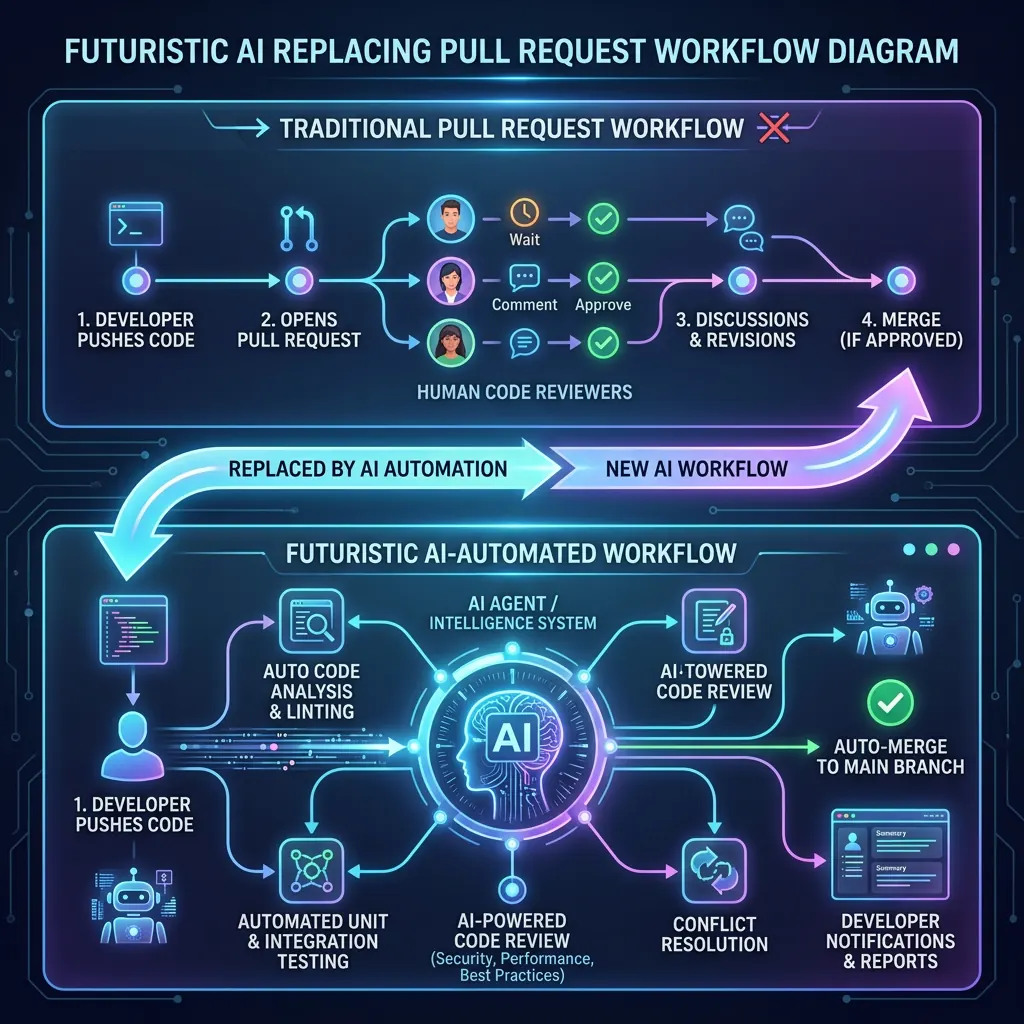
- Mastering DevOps Pipelines for Continuous Delivery Success – Covers CI/CD automation, continuous testing, infrastructure as code, and version-controlled pipeline settings.
- Top DevOps Tools & Best Practices You Need to Know – Compares DevOps practices for delivery, configuration management, and monitoring.
How do you govern advanced systems?
Consider AI system guardrails and the leadership practices that support reliable engineering at organisational scale.
- AI-Native Software Architecture: The Definitive Guide – Covers AI-native system risks and the use of evaluation guardrails and sandboxed tool execution.
- Debugging and Governing Non-Deterministic Multi-Agent Systems – Presents semantic quarantine, deterministic fallbacks, and schema-guarded execution for non-deterministic agent systems.
- Engineering Leadership for Systems That Scale – Connects engineering leadership decisions with reliability, architecture, AI-assisted delivery, and organisational capacity.
- Engineering Leadership Playbook: Build Systems That Scale – Recommends improving delivery flow, limiting priorities, and reserving capacity for system health.
- Software Engineer Survival Guide: Build, Scale, Thrive With AI – Covers traffic-spike protections and AI support for tests and boilerplate, including stateless services and observability.
Frequently asked questions
What is system design in software engineering?
System design is the process of deciding how software components work together to meet functional and operational needs. It can include service boundaries, APIs, data storage, communication patterns, infrastructure, and failure handling. Good design considers constraints such as scale, reliability, security, cost, and the ability of teams to change the system.
How do I choose between a monolith and microservices?
Consider how independently parts of the product need to be deployed, scaled, and owned. A monolith can keep development and operations simpler when a product or team is small. Microservices may help when components have distinct needs, but introduce network, deployment, monitoring, and data-coordination work. Evaluate actual pressures before choosing.
How can I make a distributed system more reliable?
Start by identifying likely failure modes and setting clear service objectives. Use timeouts, bounded retries, idempotent operations, and isolation so one failure does not overwhelm other components. Monitor latency, errors, and resource use, and test recovery procedures. Reliability also depends on controlling changes and ensuring people know how to respond to incidents.
Keep learning
Explore the other software engineering guides, or subscribe for free to get new articles in this guide by email.