
Software architecture is entering its fourth major epoch. After monoliths, distributed systems, and cloud-native platforms, we are now witnessing the rise of AI‑native architecture — systems that reason, adapt, and evolve continuously.
This essay presents a comprehensive, industry‑grade examination of how architecture, engineering organizations, cost models, reliability strategies, and developer roles are transforming.
The central claim is simple but disruptive:
The future of software architecture is not deterministic execution — it is governed autonomy.
1. Architecture Evolves Around Scarcity
1.1 The Four Architectural Ages
| Age | Scarcity | Architectural Response |
|---|---|---|
| Monolith | Hardware | Centralization |
| Distributed | Scale | Service decomposition |
| Cloud | Operations | Platform abstraction |
| AI‑Native | Decisions | Autonomous systems |
Historically, engineering optimized compute efficiency. Modern organizations optimize decision throughput — how fast systems interpret signals and act safely.
1.2 The Hidden Pattern
Every breakthrough reduced human involvement in execution:
- Assembly → Compilers
- Servers → Virtualization
- Infrastructure → Cloud
- Logic → AI reasoning
Architecture is progressively removing humans from operational loops.
2. Monoliths: The Most Misunderstood Architecture
Monoliths were never primitive. They were optimized for cognition.
Strengths
- Atomic transactions
- Predictable deployments
- Debugging simplicity
- Shared domain context
Why Hyperscalers Still Use Them
Latency‑critical workloads often retain monolithic cores because network boundaries remain expensive.
Case Study — Payments Processing
Large payment processors frequently maintain transactional monoliths surrounded by distributed edges to preserve consistency guarantees.
Failure Mode
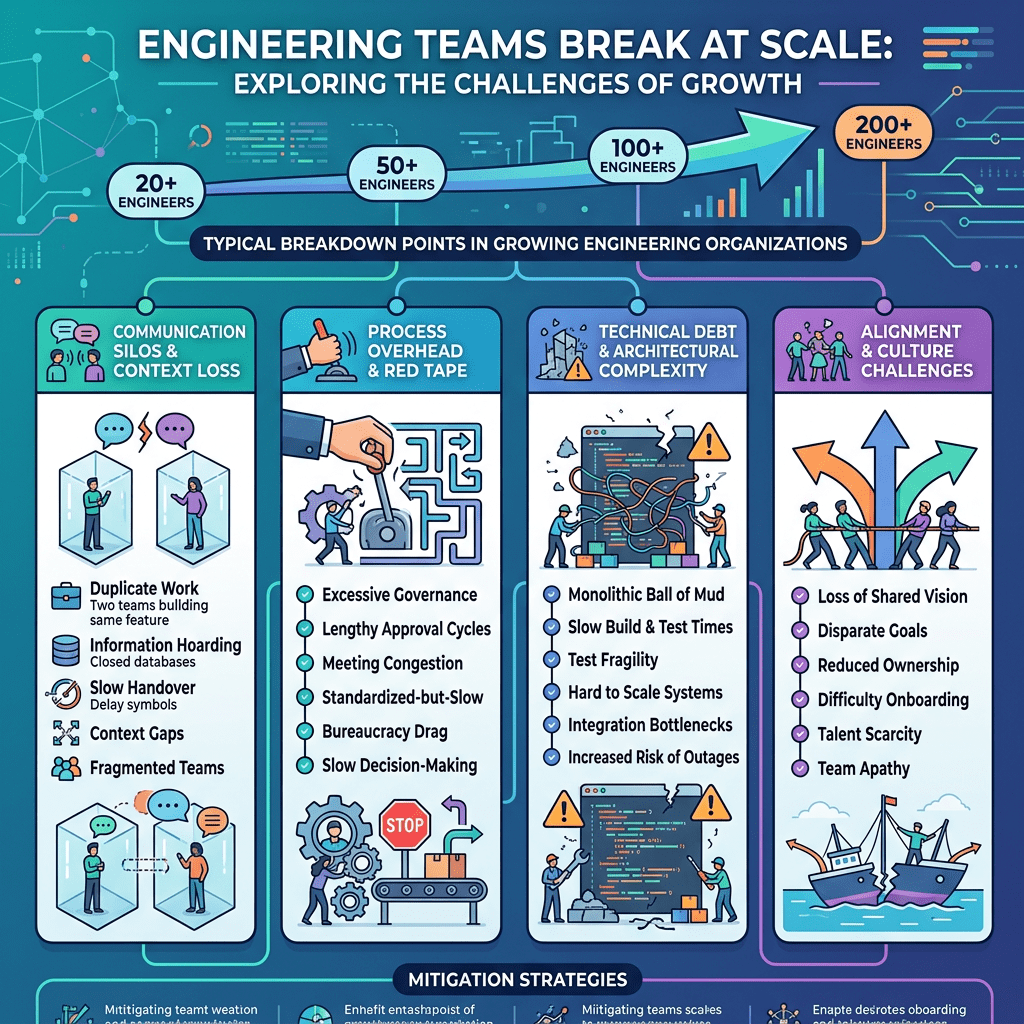
Scaling failure was rarely technical — it was organizational contention.
3. Distributed Systems: Trading Simplicity for Scale
Distribution introduces unavoidable uncertainty.
New Failure Classes
- Network partitions
- Retry storms
- Cascading failures
- Clock inconsistencies
Architect’s Playbook
| Problem | Pattern |
|---|---|
| Service failure | Circuit breaker |
| Long workflows | Saga pattern |
| Throughput | Event streaming |
| Isolation | Bulkheads |
Complexity migrated from algorithms to coordination.
4. Microservices: Organizational Architecture Disguised as Technical Design
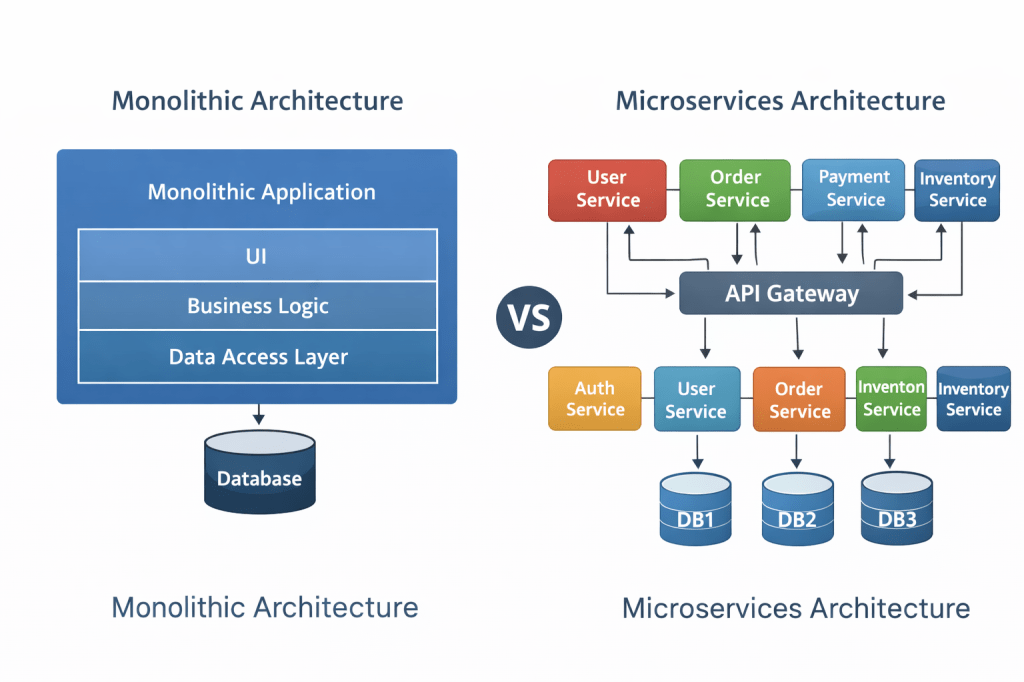
Microservices aligned Conway’s Law with system boundaries.
Benefits
- Independent deployment
- Parallel team execution
- Elastic scaling
The Hidden Tax
Real-world costs include:
- Service mesh overhead
- Observability fragmentation
- Contract governance
- Cross-team latency
Industry Reality
Many organizations adopted microservices before achieving platform maturity.
Result: distributed monoliths.
5. Cloud‑Native Systems: Infrastructure Becomes Software
Cloud platforms transformed architecture into declarative policy.
Key Innovations
- Containers
- Kubernetes orchestration
- Serverless execution
- Managed persistence
Operational Shift
Engineers moved from managing servers to managing intent.
Limitation
Decision logic still required humans.
6. The AI Inflection Point
AI introduces probabilistic execution.
Traditional pipeline:
Input → Logic → Output
AI‑native pipeline:
Input → Interpretation → Reasoning → Action → Evaluation → Learning
Architecture must now manage uncertainty as a first‑class concern.
7. Capabilities Replace Services
APIs expose functions.
Capabilities deliver outcomes.
A capability contains:
- Intent understanding
- Context awareness
- Tool orchestration
- Continuous feedback
Enterprise Example
“Fraud Detection” becomes a capability dynamically composed from models, data streams, and evaluators.
8. Agent‑Oriented Architecture
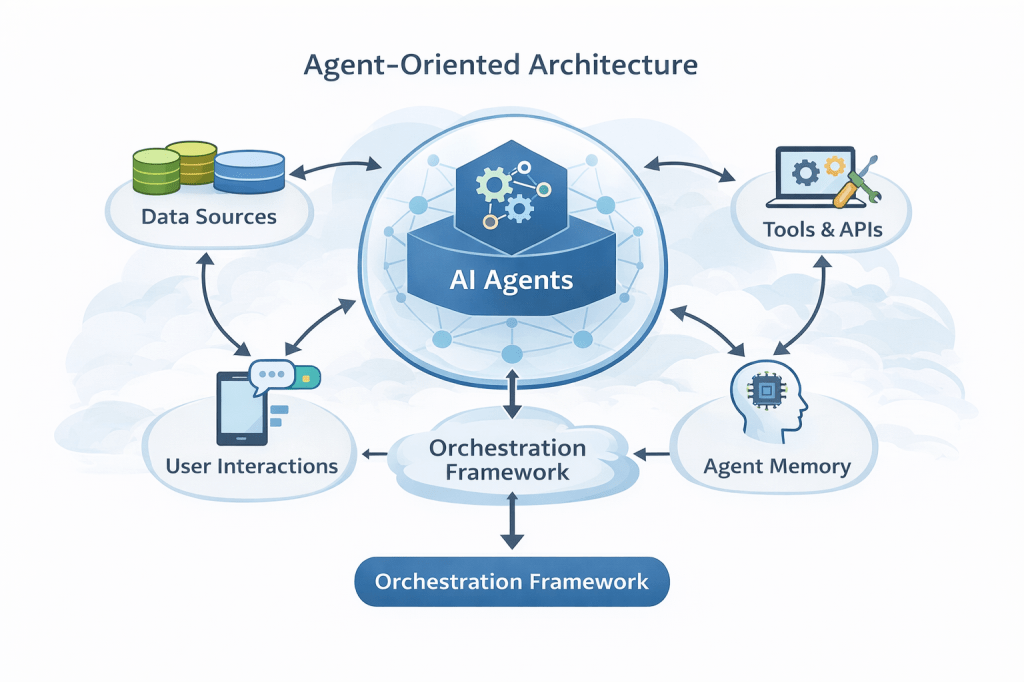
Agents operate as autonomous reasoning units.
Core Components
- Planner
- Memory
- Tool execution
- Evaluator
- Governance layer
Multi‑Agent Collaboration
Agents negotiate responsibilities rather than follow static orchestration.
Failure Scenario
Without supervision layers, agents amplify incorrect reasoning at scale.
9. Continuous Evolution Pipelines
CI/CD evolves into Continuous Evolution.
Lifecycle:
- Intent capture
- Architecture generation
- Code synthesis
- Test generation
- Runtime evaluation
- Feedback learning
Developers increasingly govern rather than implement.
10. The End of Static System Boundaries
Runtime composition replaces fixed architecture diagrams.
Systems dynamically assemble workflows based on:
- latency
- cost
- confidence
- policy
Architecture becomes fluid.
11. Runtime Intelligence
Adaptive systems embed reasoning into execution.
Examples:
- Dynamic model routing
- Predictive autoscaling
- Failure anticipation
Systems move from reactive to anticipatory behavior.
12. Observability Becomes Explainability
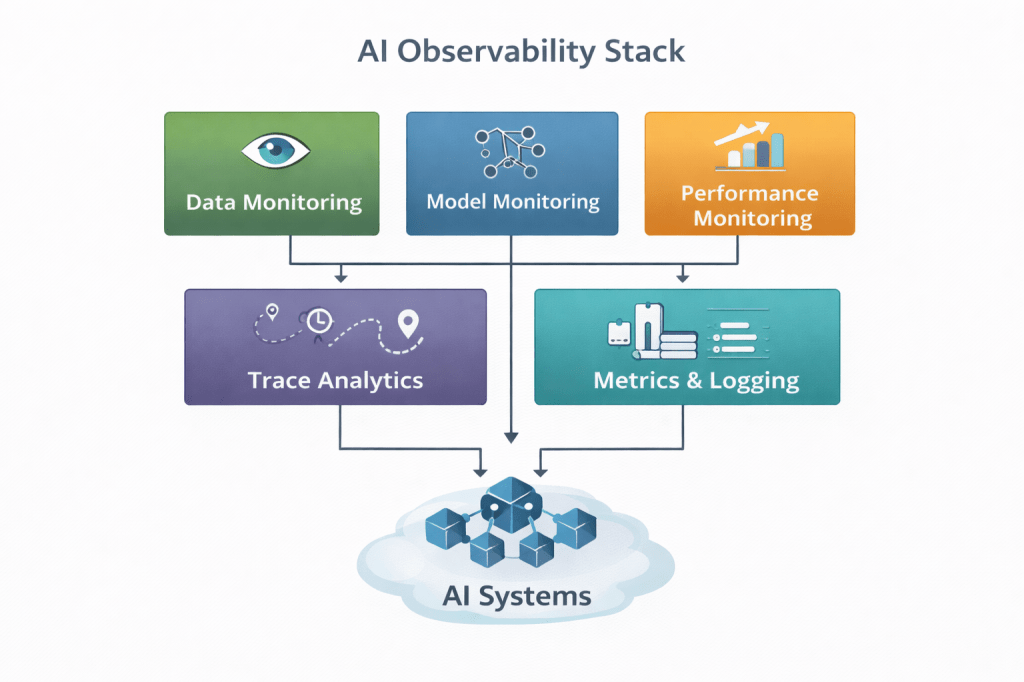
Traditional signals:
- logs
- metrics
- traces
AI signals:
- decision lineage
- reasoning steps
- confidence drift
- behavioral anomalies
Production AI requires explainable decisions.
13. Reliability When Software Writes Software
Testing shifts toward invariant validation.
Reliability Stack
- Simulation testing
- Policy guardrails
- Continuous verification
- Automated rollback
Reliability becomes probabilistic engineering.
14. Security in Reasoning Systems
New attack vectors emerge:
- Prompt injection
- Tool escalation
- Data leakage via reasoning
Defensive Model
Security evolves toward intent validation and sandboxed execution.
15. Data as Architecture
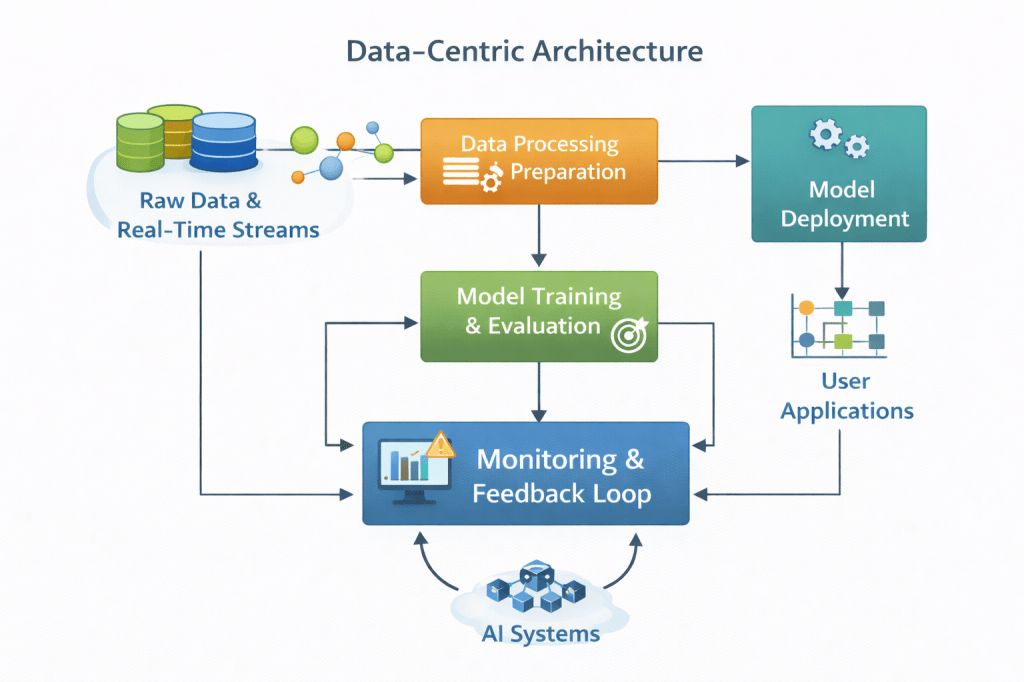
Data pipelines become structural backbones.
Critical layers:
- ingestion
- feature stores
- evaluation datasets
- feedback pipelines
Bad data becomes architectural failure.
16. Event‑Driven Intelligence
Events now trigger reasoning instead of execution.
Streaming platforms function as organizational nervous systems.
17. The New Engineer
Engineers transition toward:
- system governance
- constraint design
- evaluation engineering
- reliability supervision
Coding becomes leverage rather than identity.
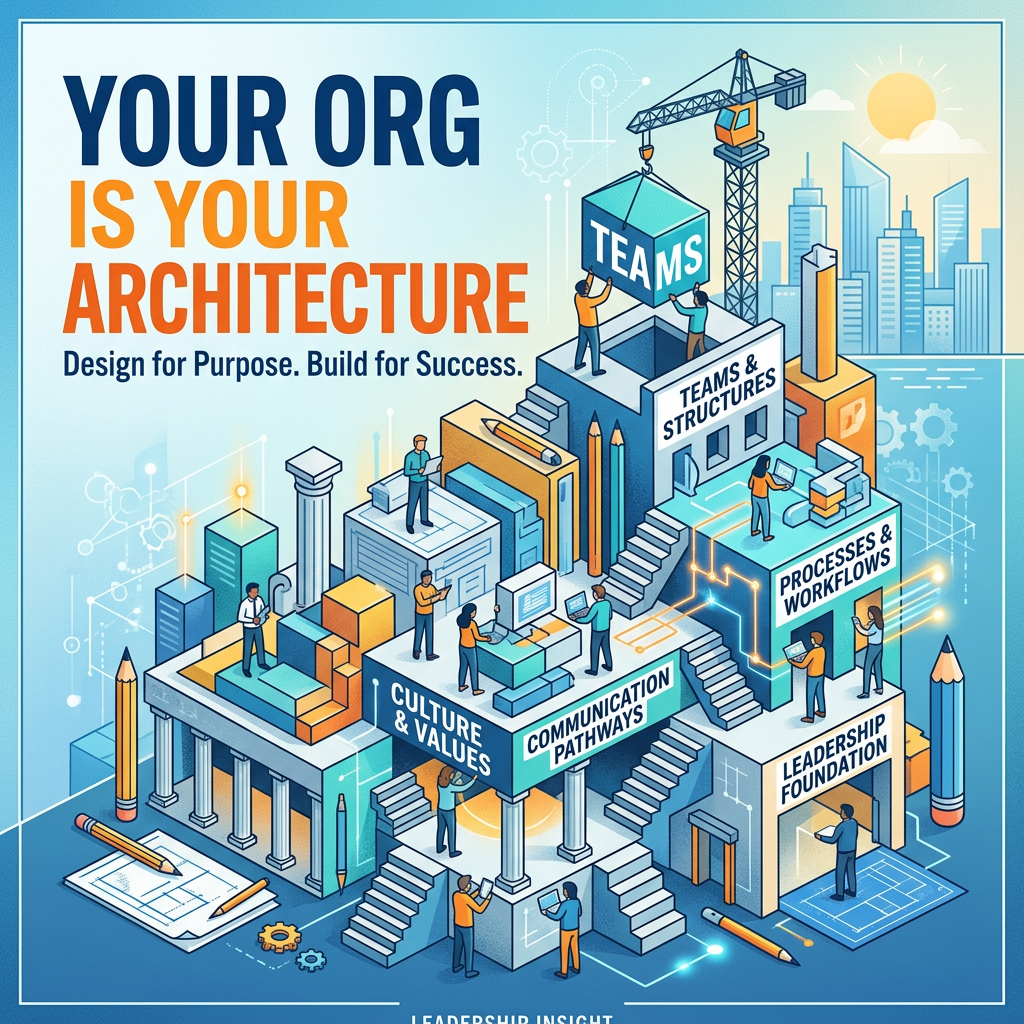
18. Organizational Architecture
Teams evolve from service ownership to capability stewardship.
Platform teams govern shared intelligence layers.
Decision latency replaces deployment speed as the scaling bottleneck.
19. Economics of the Inference Era
Cost Drivers
- tokens
- GPU compute
- latency budgets
Optimization Strategies
- model tiering
- reasoning cache
- hybrid routing
Architecture directly influences operating margin.
20. Designing Learning Systems
Learning requires structured feedback.
Feedback loops:
- human review
- automated scoring
- reinforcement signals
Uncontrolled learning equals instability.
21. Architect Decision Framework
Architects now evaluate:
- autonomy level
- governance maturity
- explainability
- risk tolerance
Architecture decisions become risk decisions.
22. AI Adoption Anti‑Patterns
Common failures:
- AI wrappers over legacy workflows
- missing evaluation pipelines
- centralized intelligence bottlenecks
Successful adoption requires redesign, not integration.
23. Migration Blueprint
Incremental transformation:
- AI copilots
- capability abstraction
- agent orchestration
- governance enforcement
Evolution beats revolution.
24. AI‑Native Reference Architecture
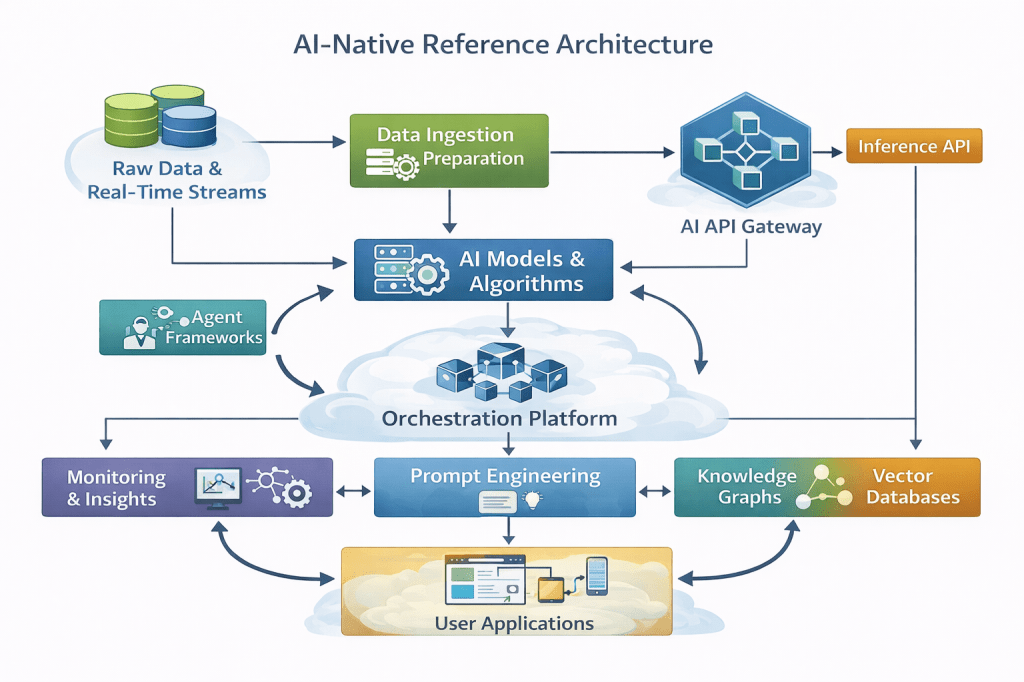
Layers:
- Experience
- Capability
- Agent
- Data
- Model
- Governance
Each isolates risk while enabling autonomy.
25. Failure Walkthrough: Autonomous System Collapse
Scenario:
An AI optimization agent reduces latency by rerouting traffic through cheaper models.
Outcome:
Accuracy degradation causes financial loss.
Root Cause:
Missing evaluation guardrails.
Lesson:
Autonomy without governance scales failure.
26. The Autonomous Organization
The endpoint is not autonomous software — but organizations capable of continuous adaptation.
Engineering becomes supervision of evolving intelligent ecosystems.
Conclusion: Architecture as Controlled Emergence
Software architecture is no longer static structure.
It is the discipline of designing systems that can safely change themselves.
The architect of the next decade is not merely a system designer — but a governor of machine decision‑making at scale.

















Leave a comment