

If you had to learn modern software engineering from scratch — not the outdated university version, not the shortcut YouTube version, but the real version engineers use to build systems like Uber, Netflix, Amazon, or PayPal — where would you start?
Right here.
This guide is a full-blown roadmap that condenses 20 years of engineering practice, FAANG-style architecture, and freeCodeCamp-style hands-on learning into one mega-tutorial.
Whether you’re:
- a junior engineer trying to level up,
- a mid-level engineer preparing for system design interviews,
- a senior engineer aiming to architect complex platforms, or
- a tech leader preparing your team for scalable development…
…this guide is for you.
Let’s begin.
📌 Table of Contents
- Clean Code — The Foundation of Everything
- Object-Oriented Thinking & the Power of Abstraction
- Design Patterns — Reusable Solutions to Common Problems
- Software Architecture — From Monoliths to Microservices
- Databases — SQL, NoSQL, Partitioning, Caching
- APIs & Integration — REST, GraphQL, gRPC
- Event-Driven Design & Streaming Systems
- DevOps, CI/CD & Reliable Deployment
- Cloud Architecture — AWS, Azure, Google Cloud
- Scalability — Load Balancing, Caching, Sharding
- Security Fundamentals All Engineers Must Know
- Testing — Unit, Integration, E2E & Automation
- Full System Design Case Study — Build a Real-World Order System
- A 30-Day Mastery Roadmap
- Final Thoughts
1. Clean Code — The Skill That Turns Juniors Into Seniors
Clean code is not optional.
It’s not a “nice to have.”
It’s the core skill that separates quick hacks from long-lived systems.
When you join a real company, the codebase won’t be 500 lines.
It’ll be 500,000.
Your job is not only to write code — it’s to avoid creating future pain.
1.1 Why Clean Code Matters
Here’s a real-world example:
Imagine two developers:
- Developer A writes fast, messy code.
- Developer B writes clear, maintainable code.
In the first 2 weeks, A looks faster.
In the first 2 months, B becomes more productive.
In the first 2 years, A’s code creates tech debt that slows the entire team.
B becomes the engineer people trust for important tasks.
That’s why clean code matters.
1.2 Practical Clean Code Principles
1. Use descriptive, long names
Short names hurt readability.
Bad:
n = 325
Good:
max_connections = 325
Clarity > brevity.
2. Small functions
Small functions communicate intent.
Bad:
void createUser(User u) {
    validate(u);
    save(u);
    sendWelcomeEmail(u);
    logActivity(u);
    updateAnalytics(u);
}
Good:
void createUser(User u) {
    validate(u);
    saveUser(u);
    notifyUser(u);
    recordActivity(u);
}
Even better:
Split notification, analytics, etc., into separate services.
3. Single Responsibility Principle
If your class does 5 things, it’s not a class — it’s a mess.
4. Avoid nested hell
Deep nesting makes logic hard to follow.
Bad:
if (user) {
   if (user.name) {
      if (user.active) {
         process(user);
      }
   }
}
Good:
if (!user || !user.name || !user.active) return;

process(user);
Much more readable.
5. Comments are for “why,” not “what”
Good code describes what you’re doing.
Comments explain why you’re doing it.
2. Object-Oriented Thinking — The Mindset Behind Scalable Software
When junior engineers start coding, they copy patterns.
When senior engineers design systems, they think in abstractions.
OOP helps you model the real world using:
- Encapsulation
- Abstraction
- Inheritance
- Polymorphism
Let’s break them down in a practical way.
2.1 Encapsulation
Hide implementation details.
Example:
class BankAccount {
    private double balance;

    void deposit(double amount) {
        balance += amount;
    }
}
Nobody should directly modify balance.
2.2 Abstraction
Hide complexity behind simple interfaces.
Example:
interface Storage {
    void save(String data);
}

class AWSStorage implements Storage { ... }
class LocalStorage implements Storage { ... }
Change implementation without changing callers.
2.3 Polymorphism
The foundation of plug-and-play design.
3. Design Patterns — The Secret to Writing Scalable Code
Design patterns aren’t “memorization topics.”
They are reusable engineering wisdom.
Let’s cover the patterns every engineer should master.
3.1 Strategy Pattern — Replace If-Else Hell
Example: Payment processors.
Without Strategy:
if(type.equals("paypal")) ...
if(type.equals("credit")) ...
With Strategy:
interface Payment {
   void pay();
}
Then pass different implementations.
3.2 Factory Pattern — When Object Creation Becomes Complex
Factories let you control and centralize object creation.
3.3 Observer Pattern — Foundation of Event-Driven systems
Used in Kafka, React, Node.js EventEmitter, Firebase…
notifyObservers(event);
3.4 Singleton Pattern — Use Sparingly
Used for:
- Config
- Logging
- Database connections
But beware: singletons introduce global state.
4. Architecture — From Simple Monoliths to Distributed Giants
Let’s explore real-world architectures step by step.
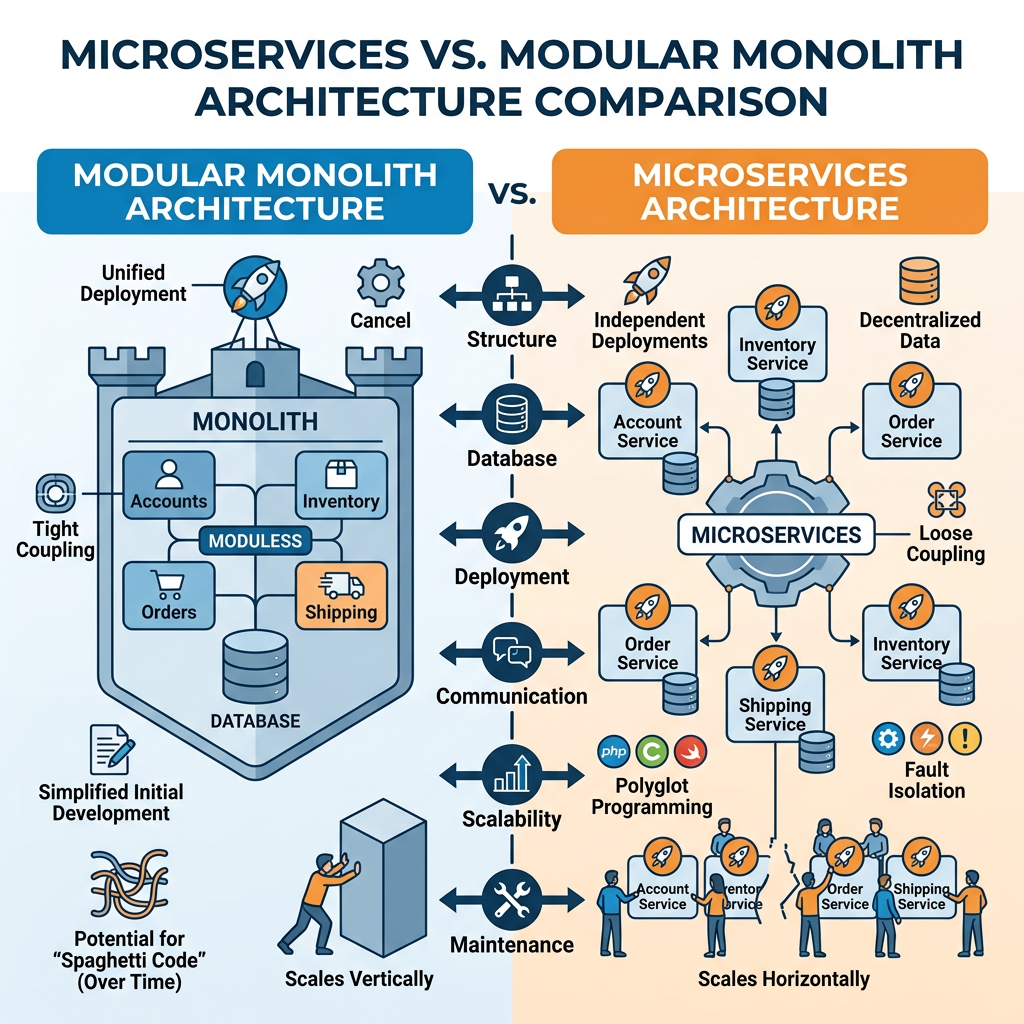
4.1 Monolithic Architecture — The Beginner-Friendly Structure
Structure:
controllers/
services/
repositories/
models/
Pros:
- Simple
- Fast development
Cons:
- Hard to scale
- Deployment is slow
- Large codebase becomes brittle
4.2 Microservices — The Architecture That Powers the Modern Web
Why microservices exist:
- Teams need autonomy
- Systems need independent scaling
- Fault isolation
- Faster deployments
4.2.1 Typical Microservice Layout
API Gateway
    ↓
Order Service → Database
    ↓
Kafka → Payment Service → Notifications
Services communicate via:
- REST
- gRPC
- Events (Kafka/SQS/PubSub)
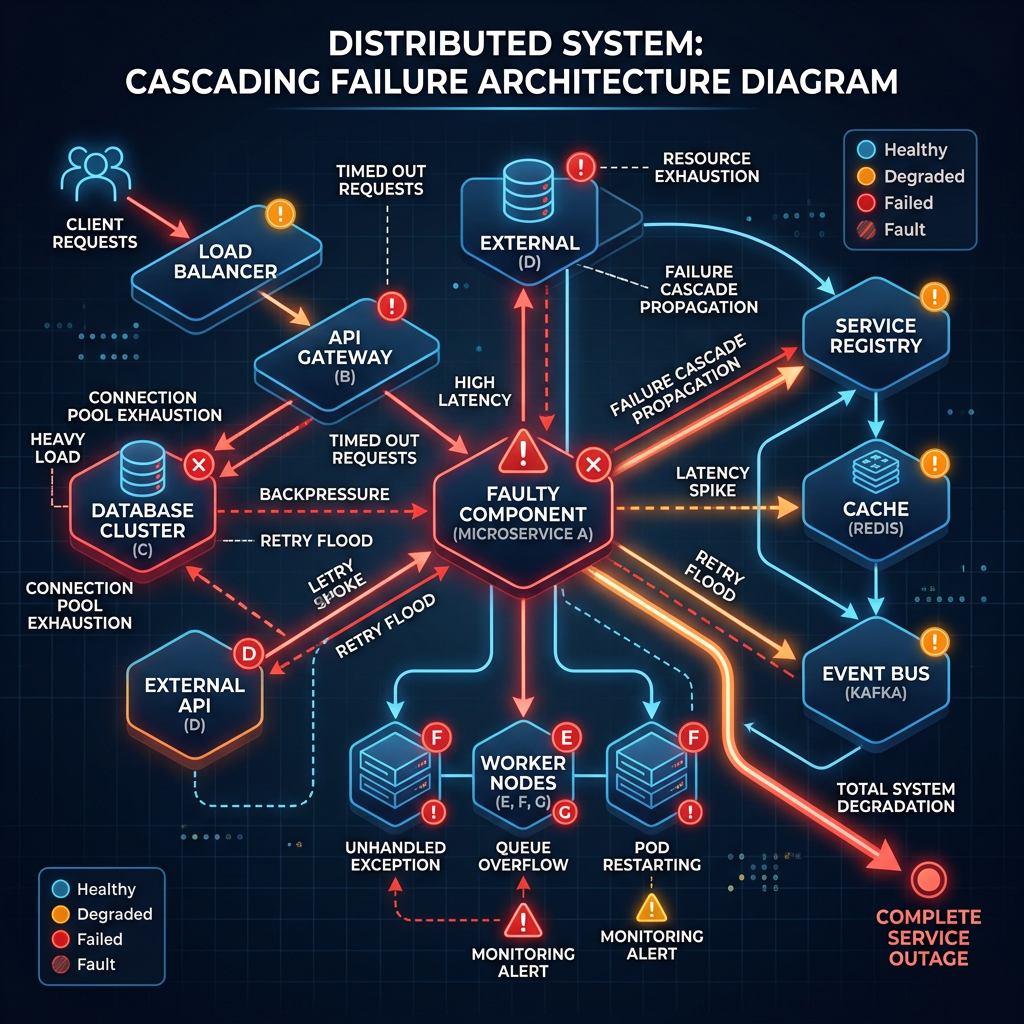
4.2.2 Microservices Challenges
- Network issues
- Distributed debugging
- Versioning APIs
- Event duplication
- Eventual consistency
You gain power but sacrifice simplicity.
4.3 Event-Driven Architecture — The Backbone of High-Scale Systems
Used by:
- Uber
- Netflix
- Airbnb
- DoorDash
Why?
Because events decouple systems.
4.3.1 Event-Driven Flow
OrderCreated → Kafka → PaymentService → NotificationService
Benefits:
- Replayability
- Scalability
- Loose coupling
5. Databases — The Heart of All Software
Let’s dive deep.
5.1 SQL — Strong Consistency
Use for:
- Banking
- Orders
- Inventory
Examples: Postgres, MySQL
5.2 NoSQL — Horizontal Scalability
Types:
Document Stores
- MongoDB
- Couchbase
Wide Column Stores
- Cassandra ← your app uses this
- HBase
Key Value Stores
- Redis
- DynamoDB
When to choose Cassandra?
- High write throughput
- Multi-datacenter replication
- Time-series data
- Event logs
- Low-latency reads
5.3 Caching — Your #1 performance boost
Common caching patterns:
1. Read Through
Check cache → else DB → write to cache.
2. Write Through
Writes go to cache & DB simultaneously.
3. Write Behind
Write only to cache; DB updates later.
4. TTL Expiry
Cache entries auto-expire.
Caching typically reduces DB load by 70–95%.
6. APIs — Contracts Between Systems
6.1 REST — Simple & Universal
GET /orders
POST /orders
6.2 GraphQL — Exact data you need
Used by:
- GitHub
- Shopify
6.3 gRPC — High performance
Use for:
- Microservice-to-microservice communication
- Streaming APIs
7. Events & Streams — Real-Time Engineering in Practice
Event-driven design is huge today.
- Kafka
- RabbitMQ
- Kinesis
- Cloud Pub/Sub
7.1 Why use event-driven?
- Loose coupling
- Scalability
- Replayability
- Real-time insights
- Audit trails
7.2 How Kafka Works (Simplified)
Producer → Topic → Partition → Consumer Group
8. DevOps & CI/CD — Ship Fast, Safely
A real CI/CD pipeline
- Developer commits code
- Pipeline triggers
- Build
- Unit tests
- Integration tests
- Security scans
- Deploy to staging
- Blue/green deploy to production
- Monitoring
- Auto rollback
Tools:
- GitHub Actions
- GitLab CI
- Jenkins
- ArgoCD
- Terraform
- Kubernetes
9. Cloud Architecture — How the World Runs Software
AWS, GCP, Azure dominate.
9.1 Essential Cloud Components
Compute
- EC2
- Lambda
- Cloud Functions
Storage
- S3
- GCS
- Azure Blob
Databases
- RDS
- DynamoDB
- BigTable
Networking
- VPC
- API Gateway
- Route53
Scaling
- Auto Scaling Groups
- Container orchestration
- Kubernetes
10. Scalability — The Art & Science of Handling Millions of Users
10.1 Horizontal vs Vertical Scaling
Vertical
Add more CPU → limited
Horizontal
Add more machines → infinite scale
Modern systems use horizontal scaling.
10.2 Load Balancers (LB)
Routes traffic evenly.
Types:
- L4
- L7
- Reverse proxy
- API gateway LB
10.3 Partitioning & Sharding
Split data across nodes.
Used in:
- Cassandra
- MongoDB
- DynamoDB
10.4 Message Queues — Avoid Overloads
Queues allow systems to:
- Smooth spikes
- Avoid overload
- Retry failures
11. Security — Basics Every Engineer Must Know
OWASP Top 10
Covers:
- SQL injection
- XSS
- CSRF
- Broken authentication
- Insecure direct object references
Key Must-Knows
- Hash passwords using bcrypt/Argon2
- Use HTTPS everywhere
- Store secrets in vaults
- Principle of least privilege
12. Testing — Your Safety Net
Testing Pyramid
        E2E (few)
   Integration (some)
Unit Tests (many)
Essential Test Types
- Unit tests
- Integration tests
- Contract tests
- Performance tests
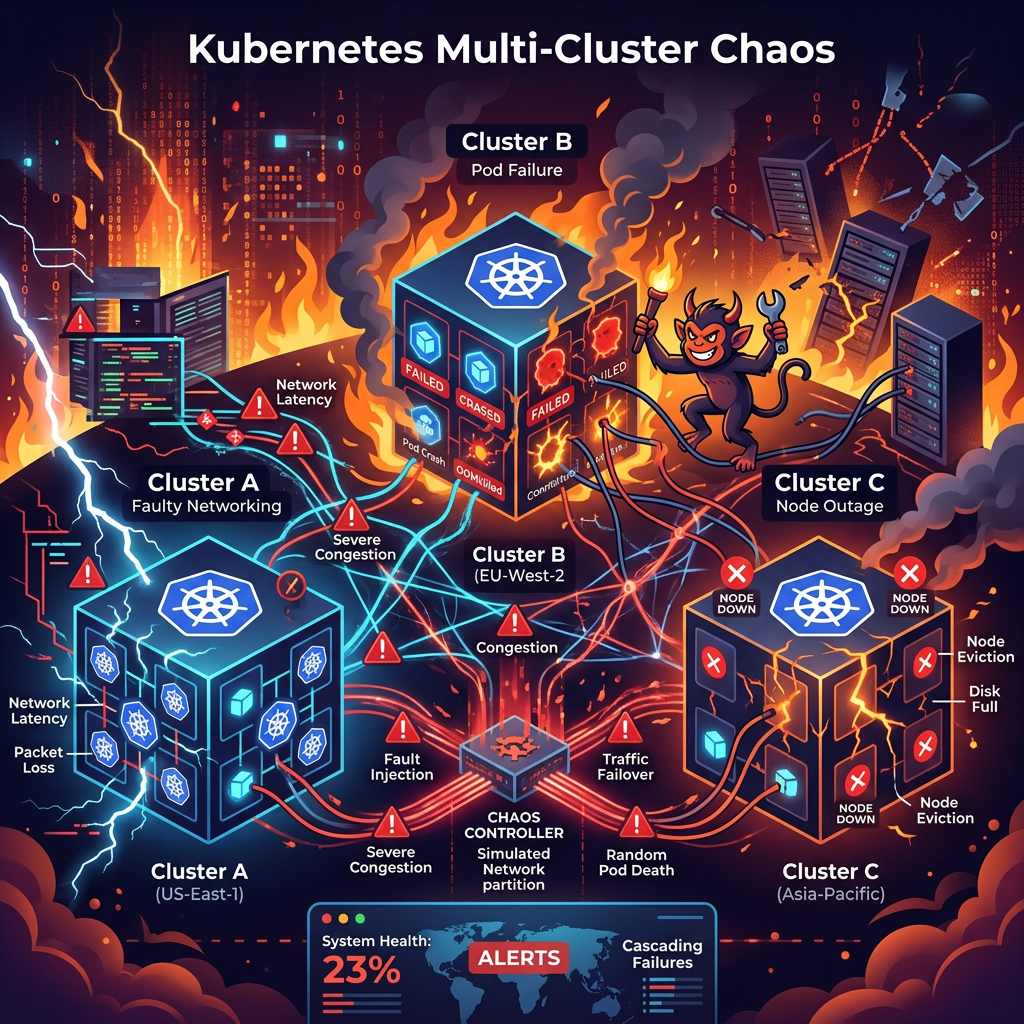
- Chaos tests
13. System Design Case Study — Build a Production-Grade Order System
This is a full real-world architecture.
13.1 Architecture Diagram
Client
   ↓
API Gateway
   ↓
Order Service → PostgreSQL / Cassandra
   ↓
Kafka → Payment Service → Notification Service
   ↓
Analytics Service → BigQuery / Redshift
13.2 Requirements
- Process 10,000 orders/min
- Handle failures
- Send notifications
- Generate dashboards
- Provide real-time updates
- Auto-scaling
13.3 Walkthrough
Step 1: Client places order
Order Service validates & saves.
Step 2: Publish event
OrderCreated → Kafka.
Step 3: Payment Service processes payment
If success: PaymentCompleted.
If failure: PaymentFailed.
Step 4: Notifications
Email/SMS.
Step 5: Analytics
Write to warehouse.
13.4 What happens if Payment Service goes down?
Kafka stores events → service catches up → no data loss.
13.5 Scaling strategy
- Auto-scaling services
- Kafka consumer groups
- Read replicas
- Caching layer
- Distributed tracing
14. A 30-Day Learning Roadmap (Practical)
Week 1 — Clean code + OOP
Solve 20 small problems.
Week 2 — Design Patterns
Implement 10 patterns in Java/Python.
Week 3 — Architecture + APIs
Build 3 services & deploy.
Week 4 — System Design
Study 10 FAANG-level designs.
By day 30?
You’ll be a different engineer.
15. Final Thoughts — Your A to Z Journey Starts Now
If you absorb everything in this guide, you will understand:
- How software works
- How systems scale
- How architects think
- How real companies build platforms
This is your roadmap.













































Leave a Reply